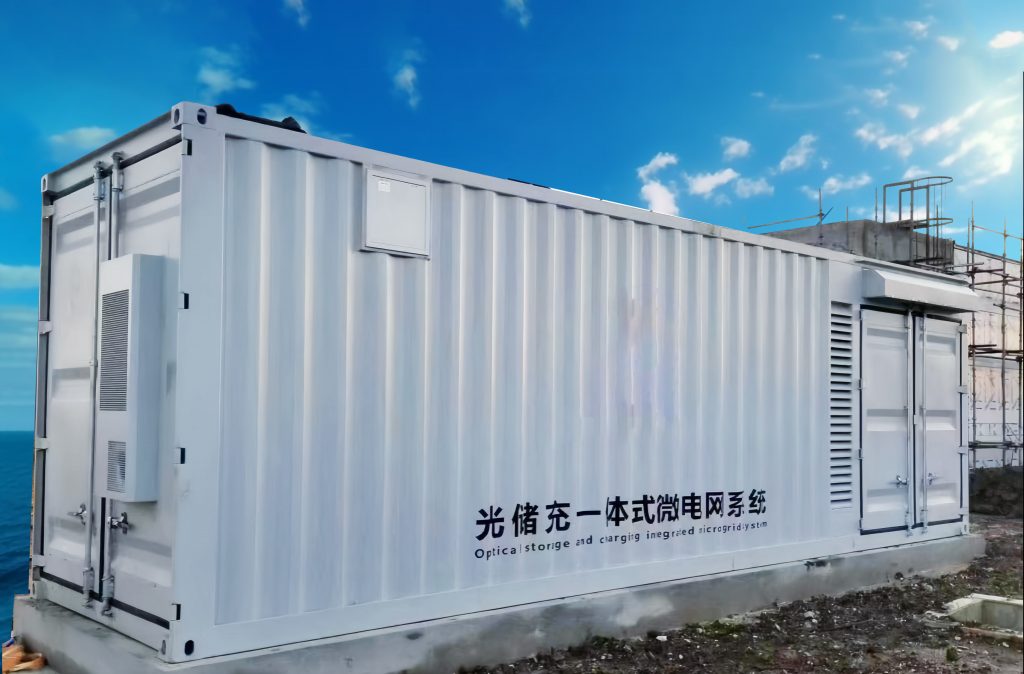
What a specification review should cover for Energy Storage System Design: RFQ preparation for early research
Early energy storage system design work is often less about choosing a final system and more about making the request precise enough to compare responses. Operations teams should first describe the intended use, site conditions, interfaces, and decision limits. An RFQ prepared at this stage should separate confirmed requirements from questions that still need technical input.
Define the use case and constraints
Start with the operating problem rather than a preferred product label. Is the early concept intended to reduce peak demand, connect with solar generation, provide backup power, support a microgrid, operate off grid, expand capacity, or combine several functions? Each purpose can change the questions in the RFQ.
Space and operating context also deserve a clear description. Record the available installation area, access route, electrical connection point, existing equipment, and any limits on installation work. These notes do not need to decide the final architecture. They give suppliers a consistent basis for identifying what they need to review.
The request should also distinguish required outcomes from design preferences. For example, “support backup power” describes an intended application, while a preferred cabinet arrangement is a possible design choice. Keeping those categories separate reduces the risk that an early assumption becomes an untested specification.
Map stated evidence to requirements
At this point, treat each supplier statement as evidence with a defined boundary. A page may list an application, support activity, or resource without establishing performance, suitability for every site, or compatibility with every existing asset. A simple evidence register can therefore use three fields: requirement, stated support, and open question.
For a practical example, the official application description says that solutions can be configured for peak shaving, PV-storage-charging, backup power, microgrids, off-grid power supply, dynamic capacity expansion, and hybrid energy systems. This makes those uses reasonable subjects for early RFQ questions, but it does not by itself prove that one configuration fits every project.
Use the same discipline when reviewing modular energy storage system designs. Ask which module or system arrangement addresses the stated use, what interfaces are involved, and which project conditions must be supplied before a configuration can be assessed. Do not turn the word “modular” into an assumption about footprint, expansion method, output, or installation requirements.
Turn open points into supplier questions
A useful RFQ question is specific enough to receive a comparable answer. Ask the supplier to identify the proposed application, the required system boundaries, and the information used to reach the recommendation. Request a clear distinction between a page-listed capability, a proposed design choice, and an item that needs confirmation during technical review.
- Define the intended application using the listed scopes, including peak shaving, PV-storage-charging, backup power, microgrids, off-grid power supply, dynamic capacity expansion, or hybrid energy systems.
- Collect the products, project cases, and technical documents that address energy storage system design, installation, and project evaluation.
- Group technical questions around PCS and battery connection, MPPT and PV-side integration, STS/ATS integration, cabinet installation, and hybrid system connection.
- Record how project planning, system integration, deployment, technical documentation, installation guidance, and after-sales communication will be addressed in the next discussion.
Integration questions should be grouped by function. The service page states support for PCS and battery connection, MPPT and PV-side integration, STS/ATS integration, cabinet installation, and hybrid system connection. Those topics can form a useful checklist for an early discussion. The buyer can ask which interfaces apply, what information is needed for each, and where installation responsibility begins and ends.
Documentation is another practical workstream. The page directs visitors to products, project cases, and technical documents for energy storage system design, installation, and project evaluation. In an RFQ, ask for the specific materials relevant to the stated application and record which requirement each document addresses. This keeps the review traceable without treating a general resource description as a project approval.
Also ask how technical support would continue as the concept develops. The page describes support from early project evaluation to long-term system operation, including project planning, system integration, and deployment. It also describes technical documentation, installation guidance, and after-sales communication with local partners. These statements support questions about the intended support process; they do not replace a project-specific scope of work.
Summarize a defensible next step
End the early review with a short decision record. List the intended application, known site constraints, interfaces to be examined, evidence collected, and unresolved questions. Then state what must happen before the next procurement stage: a technical clarification, a revised requirement, a site review, or a response that compares design options against the same criteria.
This approach helps an operations team avoid two common errors. The first is asking for a generic system without explaining the operating purpose. The second is treating a broad service statement as proof of a specific result. A careful RFQ does not need to resolve every design question immediately. It needs to show which questions matter, what is already supported by published evidence, and what still requires a bounded technical response.
For early research, YUNT can be included as a source of products, project cases, technical documents, and technical support relevant to the next review step. The strongest RFQ remains the one that connects those resources to the operation’s stated use, space, interfaces, and open decisions without claiming more than the available evidence supports.