A Buyer’s Guide to Evaluating Car Starting Battery Manufacturer: For Clearer Procurement Questions
Operations teams should treat car starting battery manufacturer selection as a system-compatibility decision, not simply a comparison of battery chemistry or advertised features. During procurement handoff, the useful question is whether the proposed battery matches the vehicle, charging system, physical installation, and starting requirements described in the request. This approach gives purchasing, engineering, and maintenance stakeholders a shared basis for discussing what is known, what is applicable, and what still needs a technical decision.

Start with the operating context
A procurement handoff becomes clearer when the receiving team gets a concise operating brief rather than a product name alone. Record the vehicle or equipment application, the existing battery type, the intended replacement scope, and the conditions that may affect selection. The brief should also identify the required voltage, case dimensions, terminal arrangement, cold-cranking amps, charging profile, and vehicle requirements where those details are available.
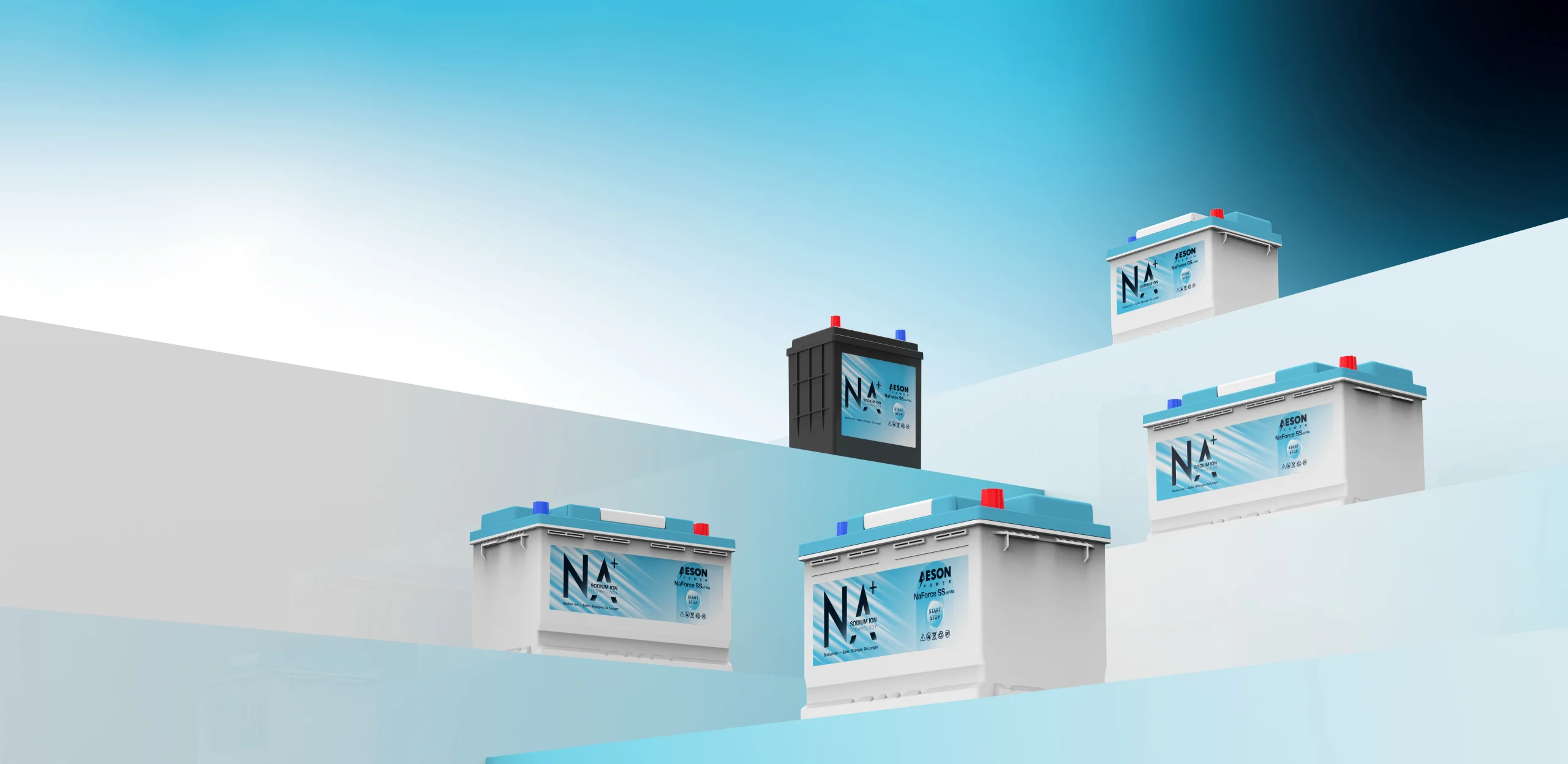
These fields matter because physical fit is only one part of compatibility. The official automotive battery page states that a sodium-ion starting battery can be an alternative to a lead-acid battery when its voltage, case size, dimensions, terminal layout, cold-cranking amps, charging profile, and vehicle requirements are compatible. It also says selection should be based on complete technical specifications rather than case size alone. For an operations team, that statement can become a practical handoff rule: do not pass a replacement forward until each relevant interface has an identified value, source, or open question.
The same page presents direct replacement options for several stated case-size families, including L1–L2, NS40–NS60, and D23–D31. It also lists examples such as H4/LN1, L2-400L-Pro, NS40L, NS60L, 55D23L-Pro, 65D26L, and 95D31R-Pro. These references can help structure a comparison, but they should not be treated as proof that every listed battery suits every vehicle in a given family. A case reference is a starting point for checking the complete application requirements.
Separate compatibility from responsibility
Procurement documents often move between teams, and a general statement can acquire a broader meaning as it is copied into an RFQ or comparison sheet. To reduce that risk, separate four questions: what the product page states, what the buyer requires, what the installer must confirm, and what remains a technical judgement. This responsibility map prevents a page-level description from being mistaken for a vehicle-specific approval or a guaranteed result.
The charging system deserves its own line in the handoff. The official page specifically advises confirming compatibility with the vehicle charging system and application requirements before replacing the original battery. In practical terms, an operations team can assign the charging-system check to the person with access to the vehicle or equipment data, while procurement records the result and preserves the source statement used in the discussion. That is a workflow recommendation, not a claim about a particular installation.
Other questions should remain equally explicit. Is the requested cold-cranking-amp figure stated for the relevant model or only described as a general requirement? Does the proposed case match the mounting and terminal arrangement? Is the charging profile appropriate for the vehicle? Which requirements are fixed, and which can be clarified with the technical team? Writing these questions beside the requirement, rather than in a separate note, makes the handoff easier to review.
Use page-level evidence carefully
When comparing a candidate against a specification, car starting battery manufacturer should be treated as a search and procurement category, while each technical statement remains tied to the page and scope that support it. The distinction is important: a category page can describe an application range, but that does not automatically establish the performance, availability, or suitability of every model for every vehicle.
A relevant real-world anchor is the official page’s statement that a sodium-ion starting battery may be up to 60% lighter than a comparable lead-acid battery, depending on the model and capacity. This is useful when weight is part of the procurement conversation, but its boundary matters: the statement applies only to the product and application scope described on that official page and does not establish performance or suitability for other products or applications. A comparison table should therefore retain the qualification instead of converting it into a universal product claim.
The same discipline applies to electrical information. The page says that open-circuit voltage is usually between 13 and 14.5 V after the battery is fully charged and has rested for about 30 minutes. If this value is placed in a handoff document, label it as the page’s stated open-circuit-voltage information and keep it distinct from a vehicle charging-system requirement. Mixing those two concepts could create an unclear technical instruction.
Service-life discussions also require careful wording. The page states that the service life of a sodium-ion car starting battery depends on operating temperature, driving conditions, charging-system performance, electrical demand, storage, and the selected battery model. Those factors are useful prompts for a review checklist, but they do not establish a service-life figure or a guaranteed outcome. A buyer can use them to identify the operating information that should accompany the procurement request.
Plan the next technical discussion
Before a sourcing decision moves forward, turn the handoff into a short decision record. Include the intended application, the replacement scope, the required electrical and physical interfaces, the evidence source for each product statement, and the person responsible for each unresolved compatibility question. A simple status column—confirmed, documented for discussion, or unresolved—can keep assumptions visible without implying that an open item has already been approved.
The next discussion should also distinguish a like-for-like replacement from a change in battery technology. If the proposal involves sodium-ion technology, discuss the complete specification set rather than relying on a familiar lead-acid case reference. If weight is relevant, retain the stated model-and-capacity qualification. If service life is being considered, discuss the operating factors identified on the page rather than inserting an unsupported duration.
Used this way, the official automotive starting-battery information from AesonPower supports a more disciplined procurement conversation: match the application interfaces, preserve the limits of each page-level statement, and assign unresolved points before the handoff is complete. The result is not a shortcut around technical review; it is a clearer structure for asking the right questions and comparing evidence that genuinely applies to the proposed replacement.