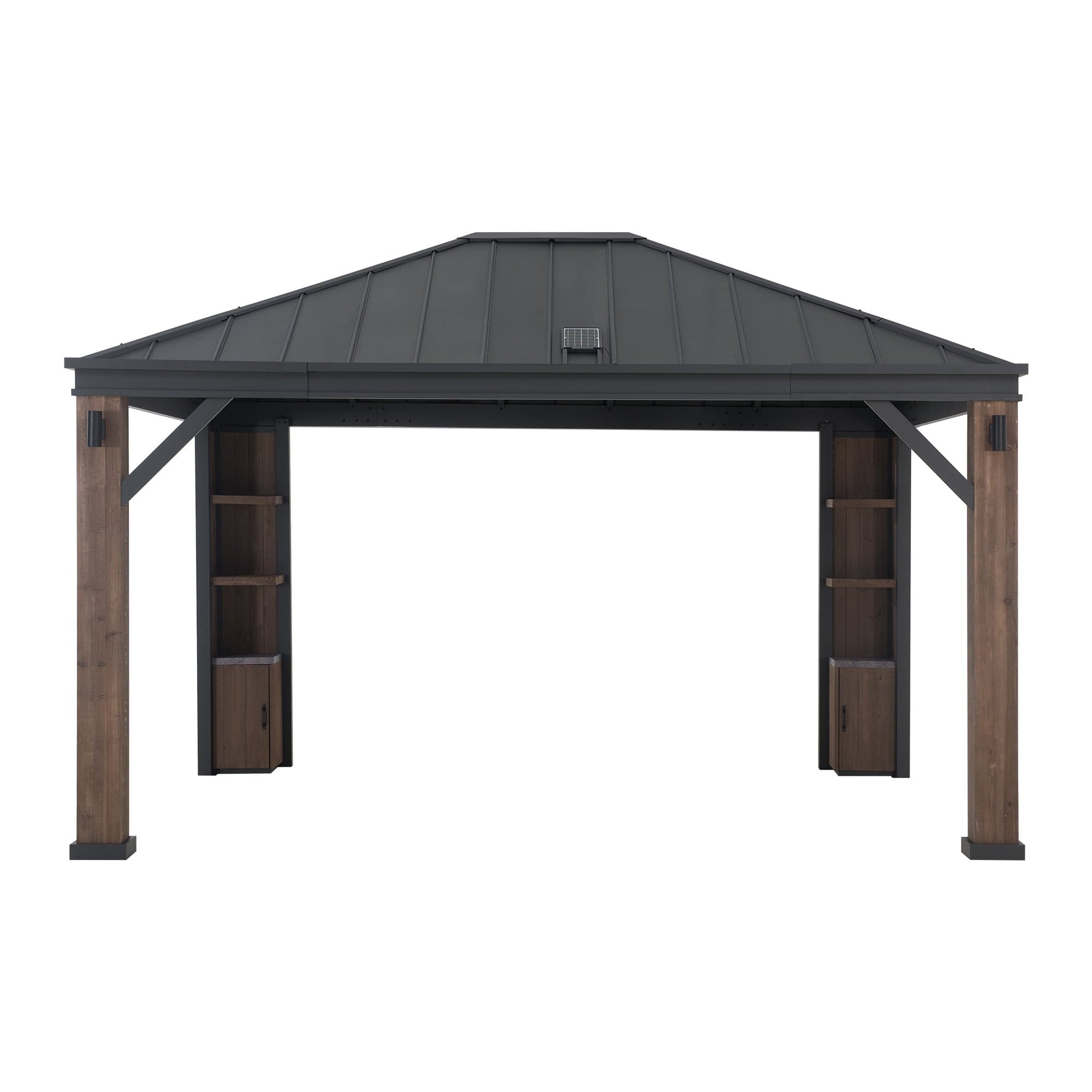
A simple planning framework for Sunjoy Hardtop Gazebos and how ceiling hooks fit an evening setup for model by model shopping
Start with the storage space
For RV owners, comparing SUNJOY hardtop gazebos should begin with the space available at home, not with a preferred roof style. Measure the storage area where the gazebo components will be kept, then note door widths, access routes, and any height restrictions that affect handling. These measurements do not select a model by themselves, but they establish practical boundaries for the shopping process.

Next, describe the intended evening routine in plain terms. Will the structure support quiet seating, outdoor dining, or a place to spend time near the RV? A plan involving lights or hanging accessories needs a different product-page review from a plan focused only on overhead coverage. Write down the items you expect to use, where they would sit, and whether the setup needs to be cleared or rearranged between uses.
Map the routine to listed product details
The collection provides several labels that can organize a first comparison. SUNJOY hard-top gazebo listings identify roof styles such as two-tier, gable, hip, octagon, and shed. They also list materials including steel, aluminum, polycarbonate, and wood. Treat these as collection-level categories, not as a description of every model. For a useful shortlist, record the exact roof style and material shown on each product listing you are considering.
For an outdoor hardtop gazebo used in an evening setup, ceiling hooks may be relevant because they connect the structure to the way you plan to arrange the space. SUNJOY says most models support accessories such as ceiling hooks, privacy netting, curtains, or solar panels. The important qualification is “most models.” Do not transfer that collection-level statement to a particular option without checking the selected model listing. A hook can be part of the planning question, but it should not become an assumed feature.
Use the same discipline when reviewing the hard-top versus soft-top comparison on the collection page. The page compares roof materials, weather-related claims, maintenance expectations, and use contexts. Those categories can help you decide what to inspect, but they are not a substitute for model-specific details. Separate three notes in your comparison: what the collection page states, what the selected product page states, and what remains your own preference.
- Record the exact roof-style label shown for each model; the collection includes two-tier, gable, hip, octagon, and shed categories.
- Record the material shown for each model rather than assuming that every collection material applies to every option.
- Check the selected model listing for the accessory detail you need, because SUNJOY says most models support accessories such as ceiling hooks, privacy netting, curtains, or solar panels.
- Use the hard-top versus soft-top comparison as a review framework for roof materials, weather-related claims, maintenance expectations, and use contexts.
Build a model-by-model review
A short review sheet can prevent a promising option from being chosen for the wrong reason. Start with the model name and the available dimensions shown on its listing. Add the roof style and material exactly as presented. Then record whether the listing addresses the accessory you intend to use. If ceiling hooks matter, mark that point clearly instead of burying it in general notes.
After recording the page details, compare them with the RV storage plan. Consider whether the packaged components can be moved through the storage route and whether the stored parts have a suitable location. These are planning checks for your property and routine, not performance claims about the gazebo. They help keep the purchase decision grounded in what you can accommodate.
It is also useful to rank your priorities before comparing models. One shopper may place accessory compatibility first. Another may care more about the roof-style label or the listed material. A third may need the option that best fits the available storage arrangement. Ranking these factors prevents a broad category label from outweighing a constraint that matters more in daily use.
Separate evidence from assumptions
Product research becomes clearer when every conclusion has a visible source. A collection filter can show the range of roof styles and materials. A collection statement can describe accessory support across most models. A comparison section can organize hard-top and soft-top categories. None of those statements should be expanded into a guarantee about a specific model, installation result, or evening experience.
Keep unsupported expectations out of the final decision. For example, do not assume that a ceiling hook is included simply because the collection mentions ceiling hooks. Do not assume that every listed material appears across every roof style. Do not infer a particular maintenance routine or weather outcome for one model from a general comparison. Instead, use the selected listing as the final reference for the features you plan to rely on.
Use a final decision point
When two models remain, compare them against the same short list: storage access, intended evening routine, roof style, listed material, and the accessory detail that matters most. A model that fits the visual brief but conflicts with the storage plan is not a practical match. A model that fits the space but does not address a required accessory also needs further review before it becomes the preferred option.
The best choice is therefore the model whose documented details align with your measurements and routine, while any collection-level label remains in its proper place. Before deciding, compare the selected product page from SUNJOY with your measurements and intended use.