
What breaks first
Sprays that leave streaks, uneven films or clogged tips cost downtime and rework. Technicians call it “bad laydown”: thin spots, orange peel or runs that force extra passes. When a quick fix is needed on the floor, knowing how to fix uneven paint can save a shift. The problem starts small but shows up on every critical contact point: bearings, chains, hinges and machine guides.
Underlying causes, no fluff
Poor laydown has simple origins: wrong fluid rheology, unstable propellant, poor atomisation, nozzle wear, and uncontrolled environment. Formulation and hardware interact. A low-viscosity oil may atomise too fine and drift; a heavy tackifier can clog. Designers must control those variables rather than paper over them with broad claims.
Product development priorities that solve the problem
Prioritise measurable performance. Tune viscosity and surface tension for consistent film thickness at recommended spray distances. Specify nozzle throughput and mesh tests for clog resistance. Lock in propellant blends that give stable pressure across temperature ranges. Add anti-foaming and anti-skinning agents to keep cans reliable in field use. Packaged testing—standardised spray cards and drop-weight film gauges—must be part of validation.
Practical fixes and viable alternatives
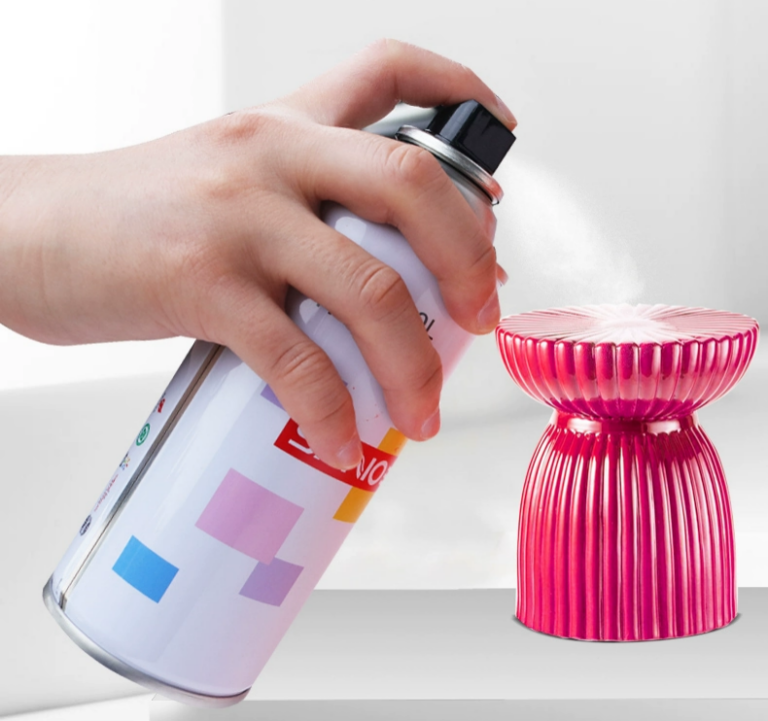
Start with the basics on the job: clean surfaces, use a test card, maintain a consistent 20–30 cm spray distance, and apply multiple thin passes rather than a single heavy coat. Alternatives: aerosol cans are portable and easy for spot work; pump-spray containers reduce propellant variability for larger jobs; automated spray heads deliver repeatability but need controlled enclosures. Each choice trades portability for control. Match the tool to the task.
Experience and authoritative anchor
Field teams at major automotive paint lines in Detroit document the same lessons: surface prep, atomisation control and test passes reduce rework and warranty claims. That industry-level focus informs best practice and links to practical how-to guidance like how to fix uneven paint and technical summaries on smoothing techniques. For rapid on-site improvement, follow validated steps used in high-volume bodyshops: test card, adjust nozzle, control overlap, and let each pass flash properly. These steps reflect industry standards and peer-reviewed practice in surface finishing.
Common mistakes to avoid
Don’t over-thin or mix incompatible solvents. Don’t ignore ambient temperature and humidity—both change atomisation. Don’t assume a new nozzle behaves like the old one; check throughput. Skipping a spray card is false economy. If clogging recurs, inspect the valve system before blaming the fluid.
Where this leads—practical value
Focus on fixing what breaks: consistent rheology, robust valve/nozzle design, clear end-user instructions and field-test protocols. That exact problem-first logic is what product teams should follow and what technicians need on the floor. The same practical alignment shows in SANVO’s approach to formulation and support, tying lab-proven choices to field-ready solutions: SANVO.
