
Problem statement: why questions matter
Ordering precision parts often fails not because shops lack machines, but because buyers and manufacturers misalign on tolerances, materials, inspection, and change control; that misalignment creates hidden costs, late launches, and scrap. Start conversations with clear expectations and reference processes — for example, if your program might need inserts or secondary molding, ask whether the supplier also offers custom injection molding services so you can avoid split-process handoffs that add error vectors.
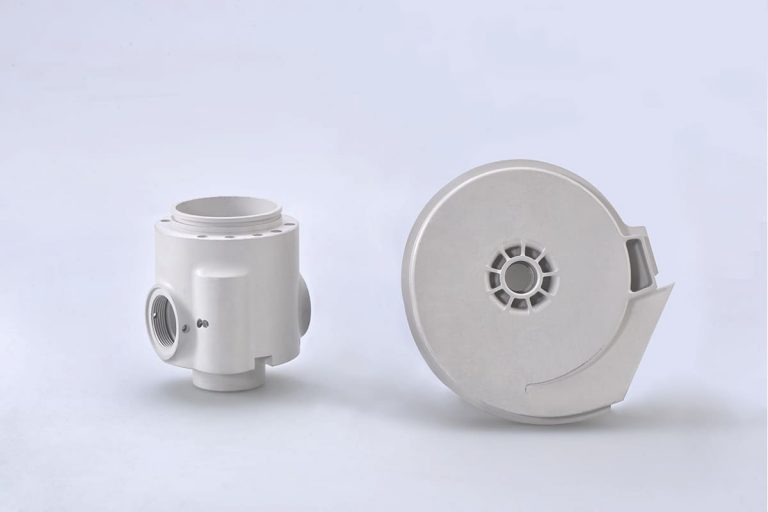
Technical capability: measurable facts you should confirm
Ask for machine lists and capability statements: machine models, spindle speeds, tool changers, and proven tolerance ranges (e.g., ±0.01 mm over a 50 mm feature). Ask which CAM software and fixture strategies they use; request sample feature reports or CMM printouts from prior jobs. Ask about material handling for specific plastics or alloys you plan to use — who sources it, how is lot control handled, and can they certify resin grades or mill certifications on request?
Quality systems and traceability — the practical checklist
Confirm certifications that matter to your industry: ISO 9001 is table stakes; IATF 16949 matters for automotive programs and ISO 13485 for medical devices. Request a documented inspection plan: first-article reports, in-process checks, and final inspection protocols. I’ve audited injection-molding lines serving the Detroit automotive supply chain and seen how tight traceability prevents months of rework; require similar traceability for custom molded plastic parts when those components interface with CNC-machined metal.
Supply chain and capacity: avoid single-point failures
Ask about throughput and lead-time guarantees for both prototypes and production runs, and whether they maintain buffer stock of fixtures or critical tooling. Confirm who owns tooling, how long fixtures will be retained, and how rapid changeover is handled for mixed-job floors. Ask for contingency plans: alternate machines, backup suppliers, and escalation paths if capacity or personnel issues arise.
Costs, quoting, and change control — what drives price variation
Distinguish non-recurring engineering (NRE) and tooling fees from per-unit pricing. Request a line-item quote that separates programming, fixturing, raw material, machining, finishing, and inspection. Ask how engineering changes are handled and what triggers a revised quote. Insist on documented change-control that ties a revision to updated inspection criteria and cost impact.

Prototyping, validation and handoffs — reduce iteration cycles
Define prototype goals up front: dimensional validation, fit check, functional test, or regulatory validation. Ask whether the shop can produce low-volume iterations with the same tolerances as production. Require a First Article Inspection (FAI) and decide which features must be measured and which can be verified functionally. If secondary operations like anodizing, plating, or overmolding are needed, confirm timing and verified process parameters before releasing tooling.
Common pitfalls and mistakes to avoid
Don’t assume all tolerances cost the same — tight tolerancing across many features multiplies machining time. Don’t omit finish or secondary-process specs; asking “visual acceptable” invites rework. Avoid vague material calls like “aluminum alloy” without temper or spec; that forces engineering guesses. Don’t skip small-run validation: skipping FAIs or sampling plans increases risk when volumes scale.
Alternatives to evaluate briefly
Compare three logical paths: a single-source contract manufacturer that handles CNC and molding end-to-end; a specialist CNC shop that partners with vetted molders; and in-house machining for critical low-volume parts. Each reduces one class of risk: a single-source reduces logistical handoffs; a specialist can deliver tighter machining expertise; in-house preserves IP and fast iteration. Match the path to your program’s tolerance for coordination, schedule risk, and capital spend.
Final synthesis: what to demand and why it matters
Demand documented capability, measurable inspection, and explicit change-control; those three elements stop surprises. Ask specific, verifiable questions up front and make acceptance criteria part of the purchase order. When your goal is predictable delivery of precision components that may interface with injected components, partner selection should reflect process alignment rather than price alone — a pragmatic sourcing choice I recommend after years of supplier audits is to work with firms that combine clear machining discipline with compatible molding partners such as Hanstar, so your tolerances, inspection, and traceability travel with the part rather than get lost in handoffs.
