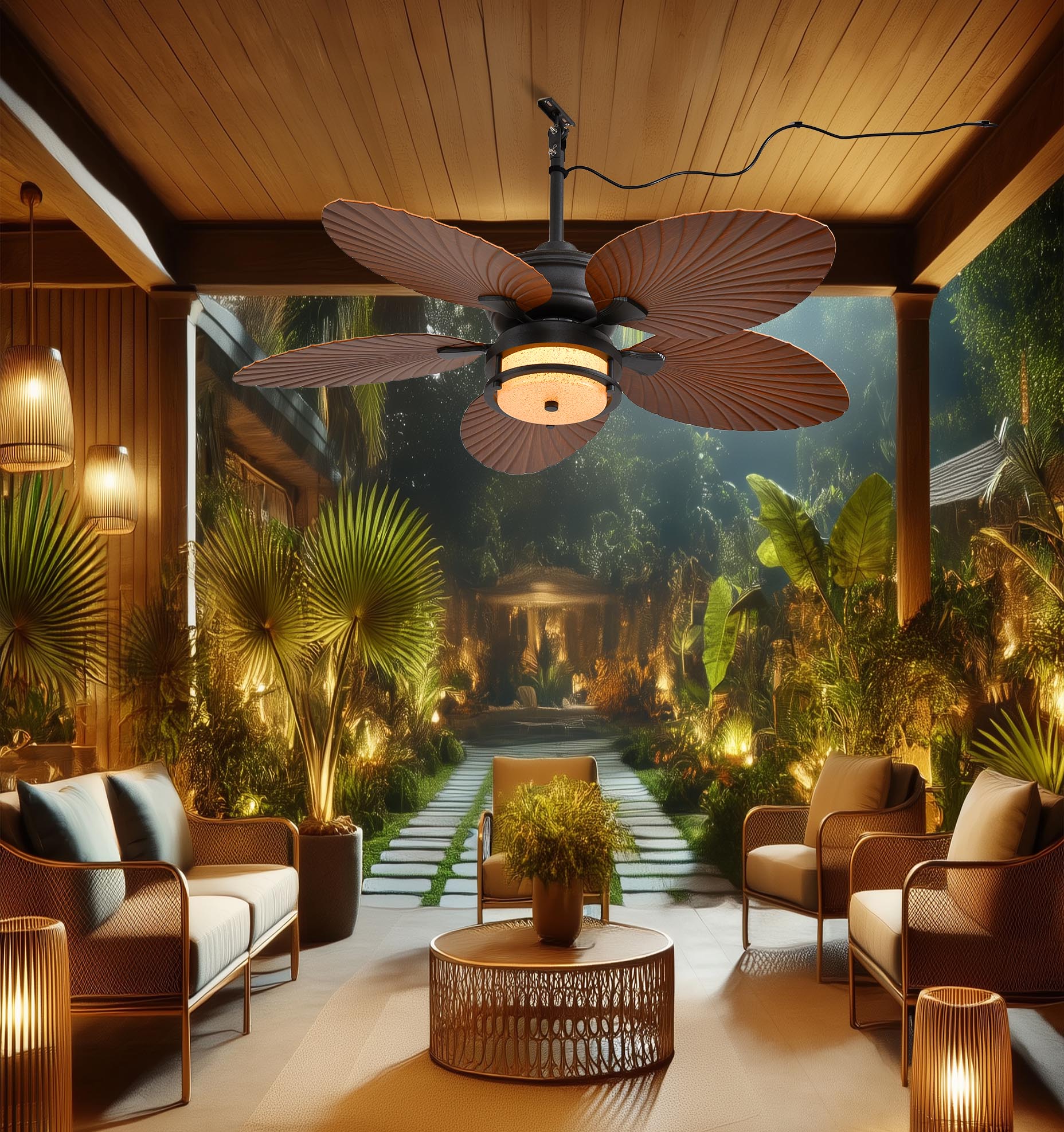
Why this procurement problem deserves your attention
When you buy outdoor cooling at scale, the choice between energy-efficient models and high-powered fans isn’t academic — it hits your P&L, install schedules, and warranty exposure. Municipal projects, hospitality chains, and large property managers routinely face this exact dilemma during summer contract renewals in places like Phoenix or Miami. If you’re evaluating options, start with a real product in hand: compare an outdoor ceiling fan with light that advertises a high CFM against one that prioritizes a low-watt DC motor and high lumen efficiency. The right call affects energy bills, rebate eligibility, and guest comfort all at once.

The core trade-offs, stated plainly
Raw torque (power) gives you immediate perceptible airflow and often higher CFM — great for open-air pavilions where distance matters. Energy-efficient units, usually with DC motors and optimized blade pitch, deliver sustained performance for less electricity and lower long-term operating cost. You’ll also see differences in IP rating and corrosion-resistant finishes for outdoor use. The procurement problem is balancing upfront unit cost, electrical consumption (kWh), and lifecycle maintenance — and you need simple metrics to do it.
A concise financial case study: two bulk bids
Imagine sourcing 200 units for a resort retrofit. Vendor A offers a high-power AC motor model at $180/unit, rated 8,000 CFM, 85 W under typical use. Vendor B offers an energy-focused DC motor model at $260/unit, rated 6,000 CFM, 35 W under typical use, with integrated LED at 1,200 lumens and remote control. Use a three-year TCO model: purchase + installation + energy + maintenance. Assume 10 hours/day operation during season, 200 days/year, and $0.15/kWh grid rate — and note the DOE guidance that properly used fans can let occupants raise cooling setpoints, often reducing AC energy needs (a recognized industry anchor).
Quick math: energy consumption alone makes Vendor B recoup the price gap within roughly 2–3 years in many climates — and faster if you leverage rebates or intend to operate fans year-round. But if you need immediate brute airflow for ventilating a large open-air kitchen, Vendor A’s higher CFM may be operationally necessary. The lesson: model real hours-of-use and local rates before letting sticker price decide.
Procurement checklist: measurable specs to demand
Require these items in bids so comparisons aren’t apples-to-oranges:

- Rated CFM and measured CFM at specified RPM (not just peak CFM)
- Motor type (AC vs DC) and nominal wattage at typical operating point
- IP rating and corrosion treatment for coastal installs
- LED lumen output and color temperature (for integrated light kits)
- Remote and control protocol details (RF, RF with wall receiver, or smart integration)
- Warranty terms and expected bearing replacement intervals
Common mistakes that inflate cost and risk
Buyers often assume rated CFM equals real-world performance — it doesn’t. They also forget compatibility: remote-controlled fans may conflict with building automation systems, or have limited RF range in dense structures. Tooling around warranty is another pitfall — cheap brackets and fasteners can double your maintenance budget over five years. And don’t overlook IP rating and blade material for coastal or poolside projects; corrosion eats performance and voids warranties fast. —
How alternatives change the calculus
Sometimes hybrid strategies win. A mix of high-CFM units in targeted zones (kitchens, service yards) and energy-efficient, sensor-enabled fans in guest areas balances occupant comfort and operating expense. Specify dimmable LEDs and occupancy controls to cut idle runtime. If you expect utility rebates, favor models with verified performance labs or ENERGY STAR-type endorsements — documentation speeds approval and reduces rebate friction.
Three golden rules for vendor selection (Advisory)
1) Quantify real hours-of-use and model energy cost across your expected duty cycle — use that to calculate payback, not just unit price. 2) Demand measured performance and third-party verification for CFM, lumen output, and power draw; accept nothing anecdotal. 3) Prioritize total cost of ownership: include expected bearing replacements, control compatibility work, and coastal-grade finishes when comparing bids.
Follow those rules and you’ll pick solutions that balance comfort, compliance, and cash flow — and that’s where Orison’s integrated approach to outdoor fixtures naturally fits into scale projects as a practical procurement option. Orison. —