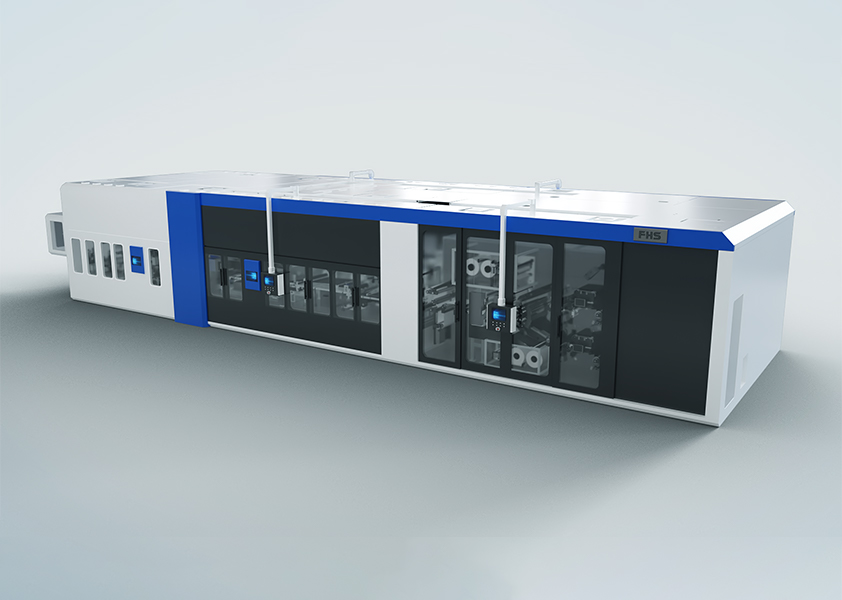
Problem statement: why conveyors fail to meet battery-line requirements
Conveyor systems that work fine for generic assembly often fail when imposed on battery manufacturing because tolerances, contamination control, and sync with cell handling are stricter; integrating battery manufacturing automation early reduces rework and line stoppages by aligning mechanical, controls, and quality layers from the outset. The central problems are repeatable part placement, particle control during transfer, and deterministic timing between pick-and-place and downstream testers—solve those three and you remove the majority of throughput variance.

Mechanical-precision checklist
– Frame and rail stiffness: specify deflection < 0.5 mm under maximum line load; document worst-case deflection at mount points. – Drive selection: prefer servo-driven modules where positioning accuracy < 0.2 mm is required; use closed-loop belt tensioning or linear motors for high-frequency indexing. – Guides and fixturing: use kinematic datum locators for cells to avoid cumulative stack-up; minimize contact area and use ESD-safe materials. – Cleanliness features: add purge zones, HEPA laminar flow adjacency, and accessible covers for routine cleaning; surface finishes should be Ra ≤ 0.8 µm where particle adhesion affects seals. – Redundancy at critical transfers: dual-actuator transfer arms or staggered buffers to allow continued partial throughput during single-point failures.
Controls, synchronization, and systems integration checklist
– Deterministic timing: implement a kinematic master (robot or conveyor PLC) that broadcasts precise motion windows; prefer EtherCAT for sub-ms synchronization. – State machines and error modes: define safe-stop, controlled-stop, and recoverable-stop behaviors; ensure motion controllers persist and report position state across stops. – I/O mapping and naming conventions: establish consistent tag names for conveyors, grippers, and sensors to avoid integration errors. – Vision and metrology handshakes: require a handshake protocol (ACK/NACK) between vision systems and motion controller before any transfer. This is critical when linking to a lithium battery cell production line, where an incorrect transfer can compromise cell integrity. – Cybersecurity and data integrity: segment network zones, use signed firmware updates, and log motion errors with timestamps for traceability.
Quality assurance: inspection, testing, and metrics
– Acceptance tests: run position repeatability tests (n=1000 cycles) and record distribution; target sigma ≤ 3 for placement error. – Throughput validation: stress-test at rated speed for at least 48 continuous hours while monitoring error accumulation and thermal drift. – Particle monitoring: install continuous particle counters at transfer points and tie alerts to interlocks. – KPI set: mean time between failures (MTBF), mean time to repair (MTTR), placement error (mm), and percentage of rejects attributed to handling. Track these monthly and correlate with process changes.
Common pitfalls and corrective actions
– Mistake: integrating vision after mechanical installation. Fix: iterate vision and mechanical geometry together using a mock-up cell to validate angles and lighting. – Mistake: underspecifying buffer capacity. Fix: calculate buffer depth from tool-cycle histograms and provide at least one extra slot per buffer for jitter absorption. – Mistake: relying solely on software limits for collision protection. Fix: combine hardware torque limits and contact sensors. – Mistake: neglecting service access. Fix: design removable sections and hinged covers to allow rapid belt changes and sensor swaps without full line shutdown.
Field evidence and expert guidance
Teams who design for deterministic handoffs see fewer unplanned stops; this observation was reinforced at The Battery Show North America 2023 where multiple integrators demonstrated reduced reject rates after adding kinematic locators and synchronized motion. Practical implementation benefits from operator feedback loops, lab validation rigs for new modules, and staged deployment—start with a single lane trial before scaling. My work advising line integrators has repeatedly shown that controlled incremental changes deliver measurable uptime gains without large capital spikes.
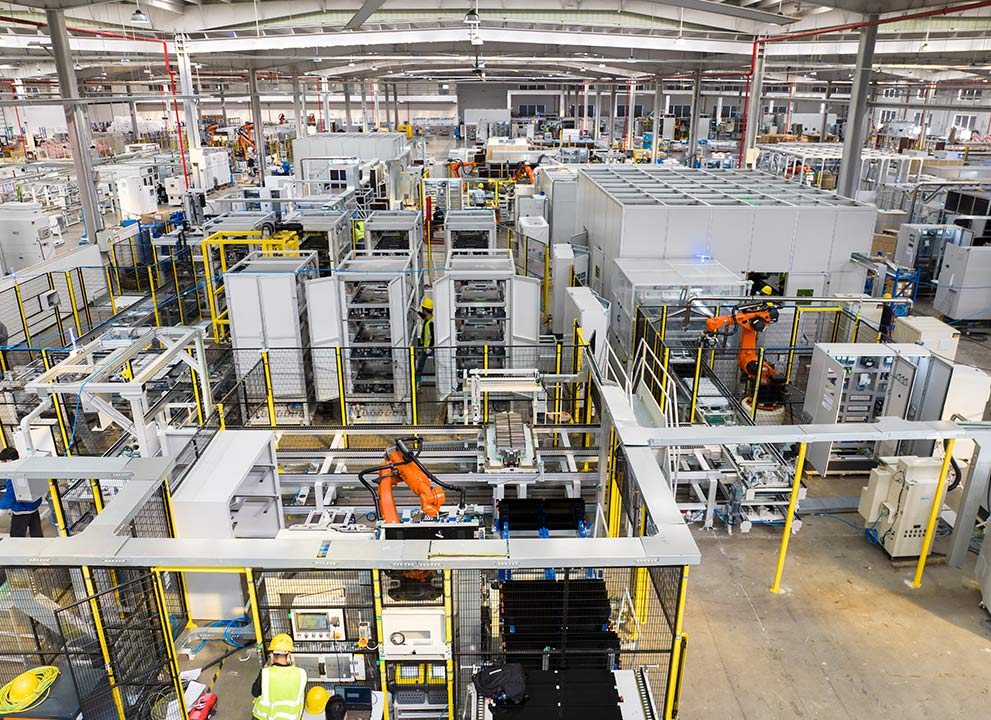
Final synthesis
This checklist focuses energy on measurable failure modes: mechanical precision, coordinated controls, and quantifiable quality metrics. Follow the mechanical and controls checklists, validate with rigorous acceptance tests, and avoid the common integration mistakes above; the result is a conveyor system that supports consistent cell handling on a battery manufacturing automation path and interoperates cleanly with inspection and testing tools. Partnering with engineering teams that combine field experience and standard procedures ties those solutions to production realities—see how FHS has applied these principles on multi-line deployments and adapted designs to meet factory constraints without speculative features.