Problem statement: why PLL trips break projects
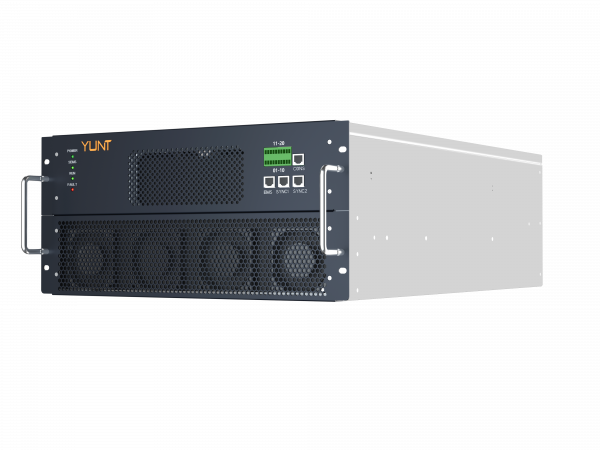
Large-scale power conversion systems face a specific, recurring headache: phase-locked loop (PLL) grid synchronization can trip when the utility bus sees sudden phase-angle jumps. That trip doesn’t just stall an inverter — it can force protective relays, cascade inverter disconnections, and undermine plant availability. When you specify a pcs module for a megawatt-class installation, the PLL behavior during transients must be part of the procurement brief, not an afterthought.
Technical constraints that show up on site
Field teams commonly encounter three constraints that make PLL stability a front-line issue: variable grid impedance, abrupt phase-step events from switching or faults, and interaction among parallel inverters. Each factor influences grid synchronization and can amplify harmonic distortion or torque on power electronics. Designers who ignore dynamics like phase-angle jump magnitude and rise time risk repeated forced trips — and repeated site visits.
Design approaches that reduce PLL sensitivity
There are clear, practical design levers that mitigate trips. First, prefer PLL algorithms with rate-limited tracking and adaptive bandwidth — they reject sudden phase steps without losing steady-state accuracy. Second, add a grid-following fallback: a vector-control mode that temporarily holds power output while the PLL reacquires lock. Third, use damping filters tuned to local impedance to prevent oscillatory interaction. These moves lower the chance of disconnects during a measured phase-angle jump and improve ride-through performance.
Factory and sourcing notes: what to require from suppliers
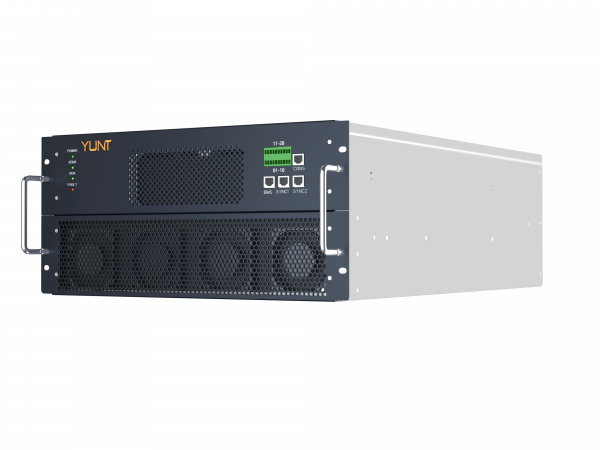
When you evaluate offers from a pcs module vendor or from a bidirectional power module factory, insist on test evidence, not vague claims. Require recorded waveforms showing PLL response to step changes: phase steps at 20°, 60°, and 120° with rise times of 1–10 ms. Ask for stability margins and specified limits for total harmonic distortion and synchronization time. A supplier that can present standardized, repeatable test runs saves weeks on commissioning.
Real-world anchor: what happened in Texas
The 2021 Texas Winter event showed how grid events cascade when controls and protection aren’t aligned with extreme transients. Large plants that lacked clear PLL ride-through strategies saw wider outages and lengthy reconnection delays. That event drove a change: grid operators now expect clearer synchronization specs and evidence from high-capacity inverter projects — and clients are rightly pushing for firm test protocols before shipment.
Common mistakes and how to avoid them
Teams often make three mistakes: 1) treating PLL settings as one-size-fits-all, 2) skipping hardware-in-the-loop validation, and 3) underestimating the impact of multi-inverter coupling. Avoid these by documenting site impedance ranges, running HIL tests with realistic phase-angle jump profiles, and simulating multiple converters in parallel. Also, don’t forget firmware update processes — a delivered fix is useless if on-site flashing is cumbersome.
Procurement checklist: practical items for your brief
Include these demands in contracts: explicit PLL test waveform logs, adaptive bandwidth support, specified reconnection time after a defined phase step, and firmware rollback capability. Require vendor training for local engineers and a modular replacement path so individual power stages can be swapped without full plant shutdown. These items prevent small events from becoming project crises.
Advisory: three golden rules for selection
1) Prioritize measured performance: choose suppliers who supply phase-step test data across the expected amplitude and timing envelope. 2) Verify control flexibility: confirm the PCS supports adaptive PLL bandwidth and a grid-following hold mode. 3) Insist on factory-proven integration: require HIL validation of multi-inverter dynamics and documented commissioning procedures. Follow those rules and you lower deployment risk markedly.
In practice, these steps lead to fewer site callouts, faster commissioning, and a system that stays online when the grid misbehaves — which is precisely the operational value YUNT brings to large-scale projects. Small detail: real test logs matter most.