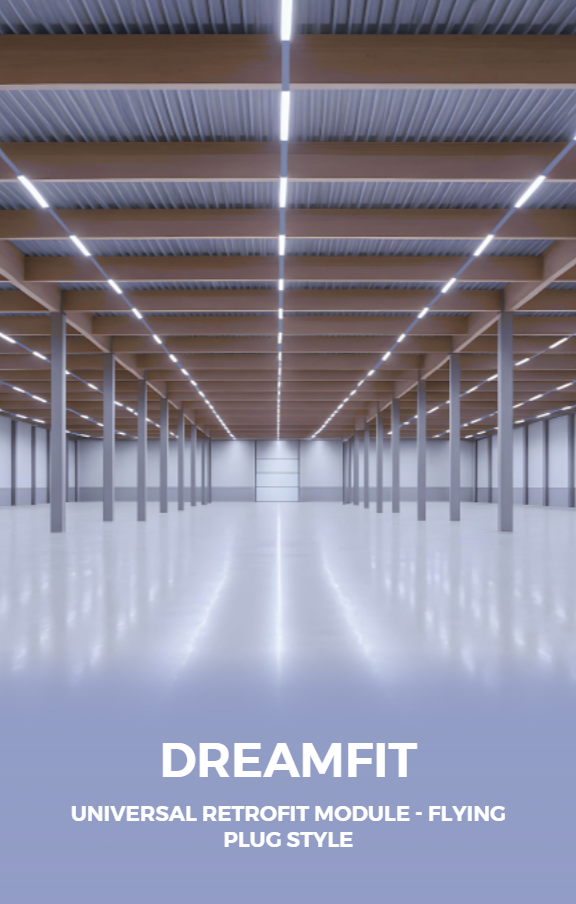
Opening: Sense the Space, Know the Need
Light should taste like clarity and feel like a cool hand on a warm day; that’s the starting point for choosing a retrofit solution that serves people, not specs. If you’re deciding between brightness and atmosphere, think first about use — task tables, warehouse aisles, or display windows — and then match the kit. A modular led light can deliver a crisp, focused beam for shelves, while a modular track lighting system lets you sculpt pools of light across a showroom. I’ve seen these choices clarified at LIGHTFAIR International, where demonstrations made the practical tradeoffs obvious: color rendering matters where product detail is judged, lumen output matters where safety is judged.
Who You Are and What You’ll Notice
Start with the user. You’re one of these people:- Facilities manager: you want reliability, predictable maintenance cycles, simple replacement parts.- Store owner or merchandiser: you want color that flatters merchandise, angles that highlight texture.- Plant supervisor: you want robust fixtures, dust- and vibration-tolerant drivers, easy access for relamping.Pick a retrofit kit with those priorities first. Feel the difference: warm, even illumination for customer-facing areas; cool, bright strips for production lines. The choices you make show up immediately as fewer shadows, less eye fatigue, and a cleaner-looking space.
Decision Steps — Practical, Sensory, User-First
Work through these steps like you’re tasting a recipe:1) Define the task: read, inspect, display. 2) Choose color temperature: 2700–3000K for warm retail mood; 3500–5000K for accurate detail and safety. 3) Match lumen output to height and spacing: higher ceilings need more lumen density. 4) Opt for modular systems if flexibility matters — they let you reconfigure without reworking conduits. Follow that order; small mistakes at step one cascade into poor outcomes later.
Common Pitfalls and How to Avoid Them
People miss the obvious. Watch for these failures:- Buying raw lumen numbers without considering beam angle — leads to over-lit centers and dark edges. – Ignoring color rendering (CRI) — product colors or control-room displays will look off. – Skimping on drivers or compatibility — retrofits with mismatched drivers can flicker or fail prematurely. – Forgetting access for maintenance — hard-to-reach modules become deferred maintenance, then complaints. Avoid each by matching the kit’s optics and driver specs to the real installation, not the marketing sheet.
Quick Comparison: Retrofit Kit Types
Here’s a short, practical taste test:- Direct-replacement LED tubes: Cheap, quick, best for open fixtures with consistent spacing. – LED retrofit panels: Smooth, even spread for drop ceilings and offices. – Modular track modules: Directional, flexible, ideal for retail and galleries. – Linear retrofit kits with external drivers: High-output for warehouses; pick IP-rated housings in dusty environments. Choose by where light needs to land and how often you’ll need to change that pattern.
Installation Realities and Small Details That Matter
Installers notice texture and sound: how the fixture locks, the solid click of a well-designed module, the absence of hum. Insist on:- Proper driver matching and surge protection. – Secure mechanical fit to prevent sagging over time. – Thermal management — heat kills LED life, so airflow and heatsinking are non-negotiable. Test a small run in-situ before a full roll-out. That early sensory check—seeing color on your merchandise, feeling glare levels at the checkout—saves headaches.
Maintenance, Upgrades, and Life-Cycle Choices
Think in cycles, not one-offs. Good retrofit kits:- Allow straightforward module swaps. – Use common driver platforms to simplify spares. – Provide firmware or dimming compatibility for future controls. Budget for periodic cleanings and for the eventual upgrade to better color fidelity or controls. Planning for access and spare parts reduces downtime and keeps spaces looking consistent.
Final Synthesis — Practical Value, Clearly Served
When you choose a retrofit kit, you’re composing an environment: light that flatters, light that guides, light that endures. A modular, user-focused approach keeps options open and maintenance predictable. For those who need a blend of directional control and simple serviceability, suppliers with modular platforms often provide the balance between craft and durability — they make reconfiguration feel effortless, like adjusting a garnish. For project teams and facility owners who want that mix of performance and pragmatism, trieco fits naturally into the conversation without forcing compromise.