Overview: why manufacturers matter
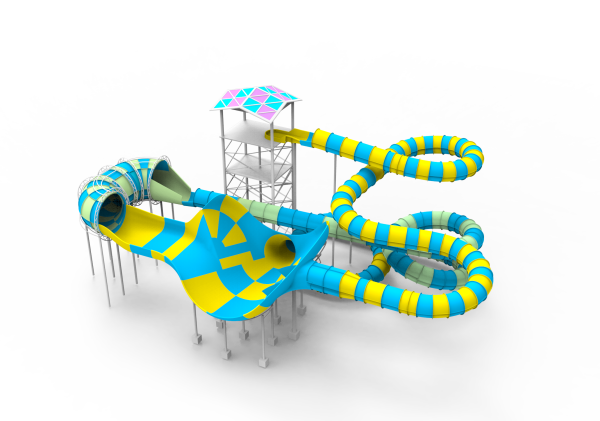
Commercial waterpark equipment sets the baseline for both guest experience and operating cost. Manufacturers decide pump sizing, turn radius, and skid-mounted filter modules long before an operator signs a purchase order. That choice shapes energy draw, water turnover, and long-term maintenance. A good example is the integration of a mat racer water slide with an optimized recirculation system: the ride geometry affects required flow rate and therefore the filtration and heat recovery design.
Comparative design: energy consumption vs. ride performance
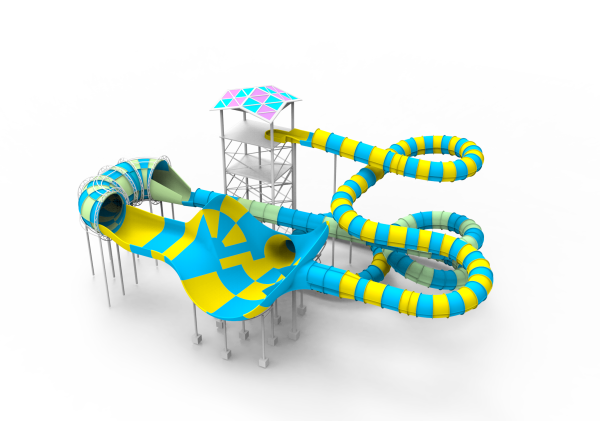
Compare two approaches. One prioritizes low head loss and oversized plumbing to reduce pump motors’ work. The other optimizes compact routing and active control for peak flow events. Both achieve similar speeds on paper, but their electrical profiles differ. Manufacturers that publish static head curves and measured flow rates make direct comparison possible. Ride manufacturers that supply turn-radius specs, nozzle sizes, and expected peak throughput shorten the engineering loop and reduce oversizing. This reduces lifecycle kilowatt-hours and helps with ROI calculations.
Water treatment technologies: practical tradeoffs
Filtration specification and disinfection strategy are central. Sand or multimedia filters give robust filtration with predictable backwash intervals. Cartridge systems increase filtration efficiency but raise service frequency. UV disinfection lowers chemical demand and reduces DBP formation; it requires stable flow and scheduled lamp replacement. Ozone offers strong oxidation but needs degassing and operator training. Each method shifts CAPEX and OPEX in measurable ways: filtration efficiency, chemical consumption, and required redundancy determine total cost of ownership. Europa-Park in Rust provides a familiar anchor for these choices: large parks there routinely combine UV with sand filtration to balance throughput and water clarity.
Operational systems: pumps, heat recovery, and control logic
Pumps consume the largest share of site power. Variable frequency drives, properly tuned to a system curve, cut energy during low attendance. Heat recovery from filter backwash and condenser loops returns heat to pool systems and shortens reheating cycles. Control logic—PLC-based or cloud-assisted—permits runtime optimization and fault detection. Operators must watch for head loss caused by fouled cartridges or worn seals; measurable pressure-drop thresholds should trigger maintenance. There is a performance ceiling, though—better components reduce rework, but installation quality and commissioning determine final results. —This is often the overlooked truth.
Comparative insight on speed slides and mat racer systems
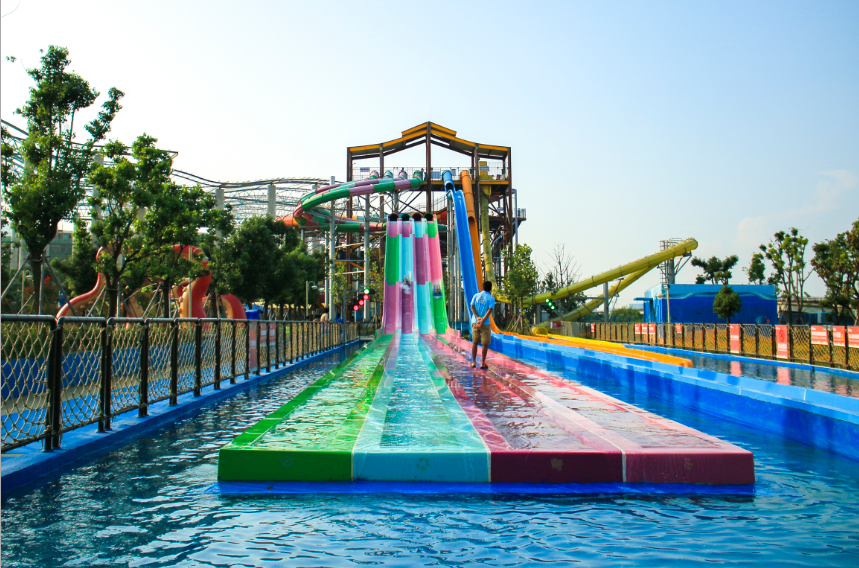
Ride families such as bolt-together speed slides and multi-lane mat racers arrive with different hydraulic footprints. Speed-oriented profiles demand short bursts of high flow; mat racer lanes need steady flow across multiple channels. Manufacturers who publish expected flow per lane, structural dead load, and recommended pump curves enable real-world planning. Suppliers that coordinate slide geometry with filtration capacity reduce the risk of cloudy lanes and high chlorine demand. Integrating low-friction liners and specifying controlled downstream weirs reduces turbulence and eases filtration loads. This lowers backwash frequency and conserves water.
How to choose: three golden rules for procurement
Rule 1 — Demand published performance metrics. Require pump curves, head-loss tables across fittings, and expected flow rate per lane. These data prevent system oversizing and inform energy modeling.
Rule 2 — Prioritize integrated treatment packages. Choose vendors who deliver matched filtration, UV or ozone modules, and documented backwash cycles with clear maintenance intervals. This reduces downtime and improves filtration efficiency.
Rule 3 — Insist on control transparency and serviceability. A system with accessible PLC logic, local override, and clear alarm thresholds lowers operational risk and simplifies staff training.
Final practical note: compare lifecycle cost, not sticker price. Consider energy use, replacement lamp cycles for UV, and typical backwash volumes when assessing bids.
Assess vendors by these metrics and the value becomes tangible — lower operating bills, predictable water quality, and fewer emergency repairs. speed slides and mat racer platforms perform best when manufacturer specs align with plant design. Dalang sits naturally in that equation by supplying standardized modules and published curves — the practical path from spec to operation. —Final thought: choose clarity over novelty.