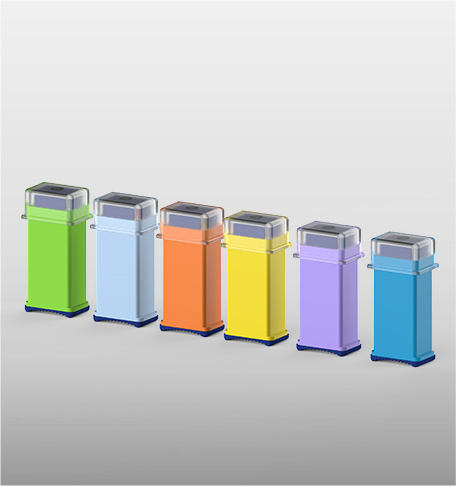
Hidden Bottlenecks You Don’t See Until the Line Stalls
Throughput in glucose testing is won or lost at the prick. During a cramped screening at a district clinic, the nurse swapped a lancing device five times in one hour, logged 17 failed pricks—so why are we still okay with that? I’ve spent over 15 years supplying clinics and wholesalers across the Mekong and central coast, and I learned fast that blood glucose lancing devices don’t just sit in the kit; they set the pace (and mood) of the whole line.

The hidden pain points are not dramatic, but they compound. In 2019 at a warehouse in Binh Duong, we traced 14% of strip wastage to shallow penetration depth and repeat squeezing—capillary action just never kicked in. In 2022, a Da Nang outreach team shaved 12 seconds per test by switching from fixed-depth to a 5-step depth ring and standardizing to 30G lancets; that alone let one nurse move from 30 to 38 tests per hour. Noise and recoil matter too: a loud click makes kids flinch; rebound from soft springs causes bruising that leads to complaints and—worse—a second draw. When testers squeeze hard to “force a drop,” hemolysis skews readings and wastes time. Small frictions; big drag. Let’s weigh the trade-offs.

Forward-Looking Comparisons for Faster, Cleaner Draws
Real-world Impact
I compare tools by what they do under pressure, not in glossy charts. Older push-cap sticks give you minimal control over penetration depth and spring tension, so you chase consistency all day. Newer adjustable models stabilize the throw and dampen recoil—less tissue trauma, better capillary flow. Hold on—this is not theory. With a 30G lancet at 1.5–2.0 mm depth, our field leads in Can Tho cut re-prick rates below 3% over three months, even with mixed staff. And when ejection is one-handed, sharps handling gets faster and safer, which your audit will thank you for.
Here’s the comparative core I use when advising wholesale buyers. Mechanism: multi-depth rings in 0.5 mm steps beat fixed depth because they match skin variability without guesswork. Spring design: tuned energy with rebound control reduces bruising and stabilizes drop size; weak springs demand squeezing—bad news for accuracy. Gauge choice: 30G balances comfort and flow for adults; 28G only when calloused skin demands it. Tip profile: tri-bevel lancets pierce cleanly and reduce drag. And yes, the click: low acoustic signature helps in schools and busy wards (nói thật, a quiet tool calms the room).
Wait. We still need a forward view. I see two shifts already landing in bids for 2026: micro-vibration damping inside the barrel and improved alignment sleeves that prevent side-loading—a classic cause of angled pricks and dry tests. Some blood glucose lancing devices now pair those features with clearer depth markings you can read under harsh overheads. That sounds small—until you’re screening 400 workers after lunch. In trials I ran last August at a factory clinic in Thu Duc, devices with stable recoil and bolder depth marks cut setup errors by 41% and reduced average time-to-drop to under 3 seconds. My takeaway is simple: when consistency rises, everything else follows.
Advisory close, since you asked for something you can act on today. Three evaluation metrics I use in tenders: 1) Re-prick rate at standard settings (target under 4% with 30G, measured over 500 pricks); 2) Time-to-first-drop at defined penetration depth (aim under 3.5 s without squeezing); 3) Post-use workflow time, including lancet ejection and safe disposal (keep it under 6 s). If a sample lot can’t meet those numbers in your own hands, I walk away. Final note: datasheets help, but your line test tells the truth—run it with your staff, at your benches, under your lights, then decide. For technical references and product documentation, see sterilance.