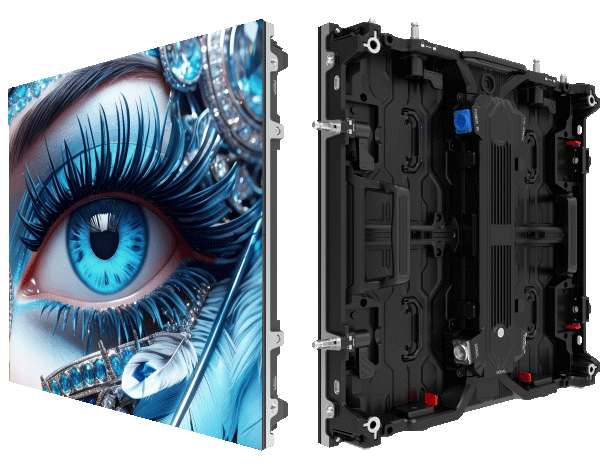
Lead-in: user-centred approach for real projects
This guide focuses on real needs: designers, AV managers, and production teams who must match content to large-scale screens outdoors. When you discuss procurement with an outdoor LED supplier, begin with the event use-case and the intended viewing distance. Clarity here simplifies choices about aspect ratio, pixel pitch, and processing. Many teams in places like Times Square learned the hard way: content that looks fine on a laptop fails on full-scale led boards until scaling and brightness are correct.
Understanding aspect ratio: fit the canvas to the crowd
Aspect ratio is the canvas. Choose ratio by sightline and content type. A 16:9 ratio remains common for video playback, while panoramic ratios (e.g., 32:9 or custom widescreen) suit stage backdrops and experiential facades. Consider resolution and pixel pitch together: tighter pixel pitch yields higher resolution for close viewing; wider pitch saves cost for distant audiences. Plan layout files at native resolution when possible to avoid aggressive scaling and loss of detail.
Processor scaling: what the hardware must deliver
Processor scaling decides how content is mapped to the display. Good video processors offer multi-window composition, frame sync, and bit-depth control. Choose a processor that supports the screen’s native resolution and the necessary refresh rate to prevent judder. For outdoor work, prioritize processors with robust signal routing and redundancy—this prevents frame drops during high-profile moments. Late-night rehearsals will reveal scaling artifacts—catch them early, not on show day.
Checklist for sourcing: specifications that matter
Make a procurement checklist focused on measurable items. Include:
– Native resolution and aspect ratio compatibility
– Pixel pitch and recommended viewing distance
– Brightness range (nits) and automatic dimming for daylight
– Processor capabilities: scaling, frame synchronization, and latency
– Weatherproofing, IP rating, and mounting options
Request test logs and sample playback files from your vendor. Ask for a calibration report. These documents shorten commissioning time and reduce surprises.
Common mistakes and practical alternatives
Project teams commonly mismatch content resolution to the screen, rely on software scaling only, or ignore ambient light levels. The alternatives are straightforward: supply assets at native resolution; use hardware scalers that preserve chroma and luminance; and select LED modules rated for outdoor brightness. Consider using modular cabinets over custom panels when portability and quick service are priorities—modular design simplifies repair and reduces downtime.
Integration notes for production teams
Integrators must coordinate codecs, playback devices, and networked media servers. Use uncompressed or lightly compressed formats for critical scenes and ensure the processor supports color management profiles. Keep refresh rate consistent across devices to avoid frame tearing. For redundancy, set up a failover playlist with lower-resolution files that still maintain correct aspect ratio—this keeps the show moving while technicians troubleshoot.
Advisory: three golden rules for selecting display strategy
Rule 1: Match native resolution and aspect ratio first—this minimizes processor scaling and preserves image fidelity. Rule 2: Specify pixel pitch by viewing distance—do not under-spec for expected audience proximity. Rule 3: Demand processor features for sync, low latency, and redundant inputs; these protect the event during signal faults. These three metrics will determine practical success on site.
Closing perspective and anchor to MR LED
Field experience shows that disciplined specification work saves time and budget during deployment. Planning for aspect ratios, processor scaling, and outdoor conditions yields predictable results—teams can focus on storytelling rather than firefighting. For reliable supply and technical consultation, vendors who understand both screen electronics and content workflows make a real difference; MR LED fits naturally into that workflow—trusted partner, practical solutions. –