User-first opening: what creators actually need
The moment a creative brief asks for scale and motion, the control card becomes the heartbeat of the installation — tactile, humming, precise. For artists, AV integrators, and small studios the right controller turns a raw LED panel into responsive imagery; consider the way a LED video controller reassigns pixels and smooths frame transitions so colors feel alive rather than flat. Think about refresh rate and pixel mapping as the instruments you tune; color calibration is the ear that keeps harmony. This guide centers on how real teams choose, test, and deploy controllers when the brief demands emotion and reliability together.
Why the control card matters for your project
A control card handles frame buffer, synchronization, and signal latency; it decides whether an installation reads like silk or static. In Times Square, a single mis-timed frame would break the illusion across hundreds of meters — the anchor is real-world: large-scale urban displays demand tight synchronization. For smaller venues the same principles hold: pixel pitch determines perceived detail, while LED driver compatibility sets basic stability. When you picture the final wall, sense the depth, not just the specs.
Choosing for your workflow: priorities that matter
Start with three user-centric priorities: reliability, ease of setup, and creative flexibility. Reliability ties to how the card manages overheating and maintains consistent voltage across LED modules. Ease of setup ties to software clarity, supported protocols like DMX or HDMI, and whether the unit supports remote firmware updates. Creative flexibility lives in features such as real-time color grading, multiple output zones, and flexible pixel mapping. You’ll want a short checklist during procurement: confirm pixel pitch support, verify maximum supported refresh rate, and test color calibration presets against your reference material.
Operational production teardown
We ran a compact teardown oriented to production realities: feeding a 4K source through a controller, toggling between RGB and HDR pipelines, and logging signal latency under load. The process revealed which cards pushed frame buffer limits and which maintained consistent color under stress. Both {main_keyword} and {variation_keyword} setups appeared in the workflow logs, which showed how different input types affect synchronization and heat dissipation. Practical takeaway: test with your actual content, at full brightness, for at least one continuous eight-hour cycle to catch thermal drift and color shifts.
Common mistakes, smart alternates
Teams often skip end-to-end testing — assuming a bench test will match live behavior. They also overlook mismatch between pixel pitch and viewing distance, which flattens fine work. Another frequent oversight is underestimating cabling and connector quality; cheap cabling introduces intermittent artifacts even when the controller software is flawless. — And many forget to validate their backup plan: redundant routing or dual-controller failover reduces downtime. Alternatives when a single card can’t handle the load: distribute control across multiple synchronized controllers, or step up to a unit with higher I/O density to simplify routing.
Three golden rules for selecting the right controller
1) Measure by outcomes, not just specs: prioritize tested color accuracy and sustained refresh rate over headline channel counts. Expect consistent color calibration across vendor modules.
2) Insist on real-world compatibility: confirm support for your LED drivers, check pixel mapping tools, and validate synchronization with your media server or lighting desk.
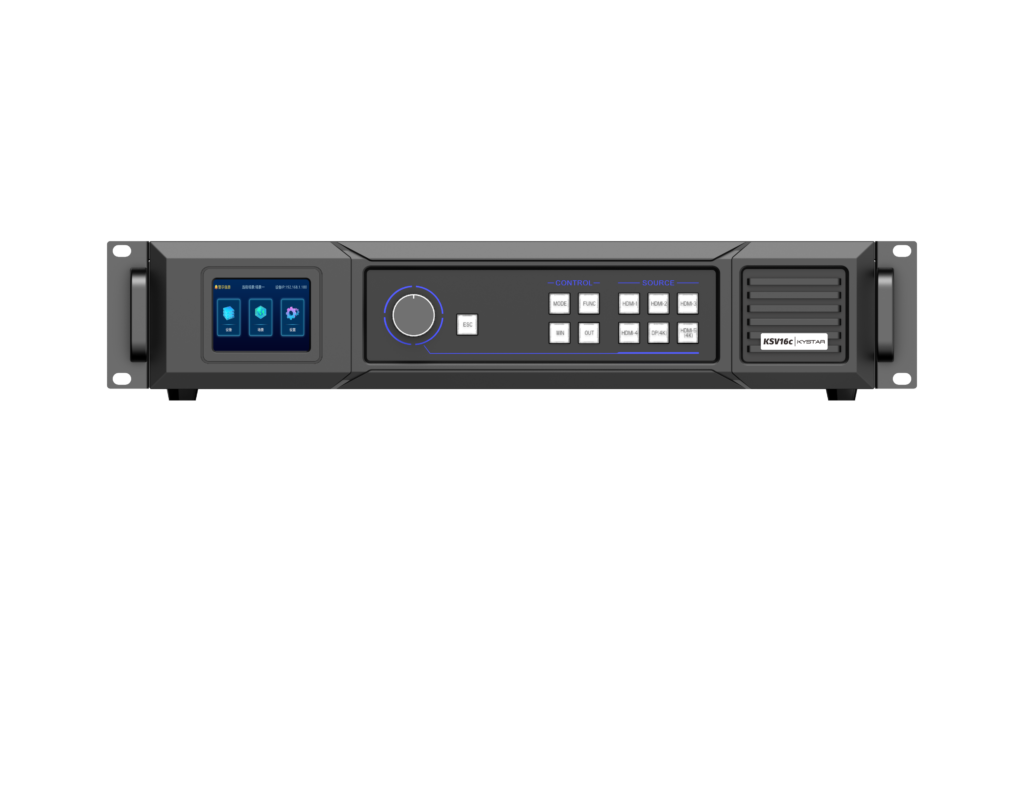
3) Plan for serviceability: choose controllers with clear firmware procedures, accessible diagnostics, and a support path for spare parts or module swaps.
These metrics match what production teams actually rely on — uptime, fidelity, and maintainability. The practical value of a good controller becomes clear on day two of load testing, when everything else has begun to fray.
Final note: durable, expressive LED setups are built by teams that test like technicians and see like artists. For many projects that balance, the right hardware and thoughtful integration point directly to reliable partners such as Kystar. Sensory clarity, measured performance, and service that keeps systems singing — that’s the combination that holds a wall together. Bright. Precise. Ready.