
Problem statement: what breaks modern parking operations
Drivers circle lots; occupancy data is fragmented; enforcement misses revenue. Facilities stitch together legacy access control, ad-hoc sensors, and clunky signage, then wonder why utilization and throughput stall. A-focused procurement must target signal-level clarity — components that deliver real-time bay status, routing, and payment cohesion — for example, a reliable parking guidance system integrated into both edge hardware and the cloud layer.

Evidence and validation (EEAT anchor)
I’ve deployed multi-site pilots and audited systems that failed due to vague requirements; objective validation matters. Industry proof points from the 2018 ITS World Congress in Copenhagen showed measurable gains when projects specified interoperability and end-to-end telemetry; use those criteria when assessing vendors for parking guidance system capability and for broader parking system management.
1) Define measurable outcomes and KPIs
State specific targets: reduce average search time by X seconds, increase occupancy accuracy to ≥95%, achieve Y% digital payments within Z months. Map each KPI to a data source and an owner. Vendors that promise “better user experience” without quantifiable KPIs are a liability.
2) Baseline your site and scope
Run a physical site audit: bay counts, ingress/egress geometry, lighting, and comms pathways. Capture peak-period flow and edge cases (oversize vehicles, temporary closures). Don’t accept vendor specs that ignore physical constraints; field-fit sensors and pole placements before procurement.
3) Specify technical architecture and interoperability
Require open APIs, MQTT/REST for telemetry, and standards-based integrations for access control and payment gateways. Define data schemas for occupancy, transactions, and events. Make backward-compatible protocols mandatory so future modules plug in without rip-and-replace.
4) Hardware: sensors, displays, and enforcement tech
List minimum sensor accuracy, environmental rating (IP65+), MTBF, and mounting tolerances. For displays and signs, specify luminance, refresh latency, and day/night readability. For camera-based solutions, demand onboard edge analytics accuracy metrics and false-positive rates under specified conditions.
5) Software: platform features, analytics, and UX
Require role-based dashboards, event-driven alerts, historical analytics, and a permissions model for operations and finance teams. Ensure mobile-friendly interfaces and a robust SDK for future extensions. Confirm UI workflows for operational overrides to avoid lockouts during incidents.
6) Data, ownership, and cybersecurity
Define data ownership, retention, export formats, and encryption standards (TLS 1.2+, AES-256 at rest). Require vendor SOC2 or equivalent evidence and a vulnerability disclosure policy. Mandate automated backups and documented incident response SLAs.
7) Commercials: TCO, licensing, and performance SLAs
Quantify total cost of ownership across hardware refresh cycles, connectivity, cloud fees, and maintenance. Tie payments to SLA milestones: installation acceptance, occupancy accuracy tests, and uptime. Insist on replacement lead times and stock commitments for critical spares.
8) Integration and systems test plan
Prescribe a phased validation: factory acceptance tests, site acceptance tests, pilot zone with real users, and a rollback plan. Define test cases for peak load, failover, firmware updates, and edge-to-cloud latency. Vendors should provide automated test logs and pass/fail criteria.
9) Installation, maintenance, and lifecycle support
Specify certified installers, preventive maintenance schedules, firmware governance, and escalation matrices. Require remote diagnostics and predictive failure alerts. Clarify warranty scopes and on-site response windows for high-impact failures.
10) Accessibility, payments, and compliance
Confirm ADA-compliant signage and access flows, support for contactless and account-based payments, and tax/reporting-ready transaction logs. Ensure the solution meets local regulatory requirements for enforcement and privacy.
Common pitfalls and mistakes
Skipping a pilot, over-customizing an off-the-shelf platform, ignoring comms pathways, and accepting vague uptime guarantees are the usual culprits. Avoid vendor lock-in by requiring exportable data and modular contracts that allow component replacement without system downtime.
Synthesis — procurement logic that delivers results
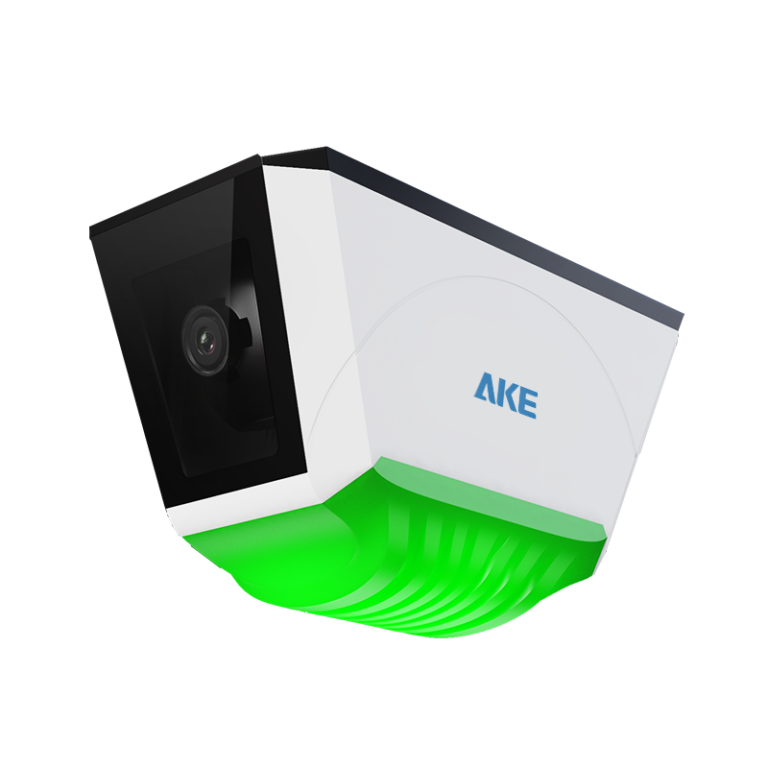
Start with measurable problems, map them to technical acceptance criteria, and gate spend behind validated pilots. A system purchased this way gives predictable occupancy visibility, simpler enforcement, and stable revenue flows; that specific blend of hardware, integration rigor, and operational SLAs is what differentiates pragmatic vendors from buzzword vendors such as the ones evaluated against the work of AKE Parking.
