
Opening: The buyer’s problem
Buyers walk into labs expecting clear answers: will this coating, plastic, or composite survive years outdoors? The shortfall is predictable — lab devices promise accelerated results, but variability in light source, temperature cycling, and moisture leaves engineers squinting at conflicting data. Choosing the right weathering chamber for your work matters because mismatched equipment produces misleading lifetimes, wasted samples, and costly rework.
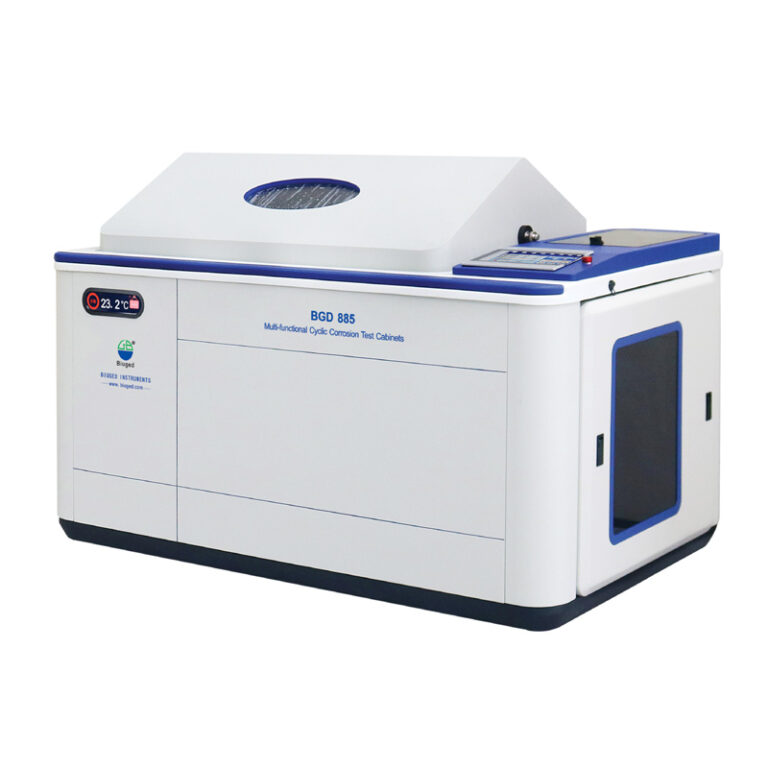
The core issues that create buyer confusion
Manufacturers use different UV sources (fluorescent UV vs. xenon arc), programmers vary in cycle fidelity, and service support ranges from local to overseas. Buyers often focus on headline specs — “4000 W xenon” or “programmable cycles” — while overlooking spectral match to natural sunlight, uniformity across the test area, and ease of maintenance. Procurement decisions driven by lowest upfront price often encounter higher total cost of ownership when calibration, downtime, or inconsistent results appear.
Evidence, standards, and grounded experience
Real lab experience and recognized standards guide sound choices: ASTM D4329 and ISO 4892-3 define methods, but they don’t remove the need for equipment that performs reliably under those methods. Researchers at NREL in Golden, Colorado, and similar institutions have long compared accelerated exposure with field data to refine predictive approaches. Practical evaluation should therefore prioritize proven control of irradiance, temperature stability, and repeatable humidity cycles. For hands-on testing needs, a reliable weathering tester that documents compliance with these standards reduces guesswork and improves traceability.
What to inspect before you buy
Check spectral match: does the UV source reproduce the wavelengths your product will face? Confirm irradiance control and stability across the chamber chambered area. Demand data-logging and calibration certificates. Look for programmable cycles with accurate temperature and humidity control, plus condensation or water spray if your application requires wetting. Ask about spare-part availability, local service, and firmware update practices. Think about sample size and throughput: a unit that fits two coupons may be useless when you need dozens. Finally, validate vendor test reports against an independent reference or round-robin if possible.
Common mistakes and how to avoid them
Buyers confuse accelerated severity with real-world equivalence; a harsher cycle will fail samples faster but won’t always reproduce the same failure modes seen outdoors. Avoid assuming all UV sources are interchangeable—spectral differences change degradation chemistry. Don’t neglect calibrations: periodic irradiance and temperature checks are not optional. Overlooking humidity control or condensation delivery is a frequent error for polymers and coatings. Prevent these mistakes by specifying acceptance tests, requiring calibration intervals in the contract, and insisting on documented environmental uniformity maps for each chamber.
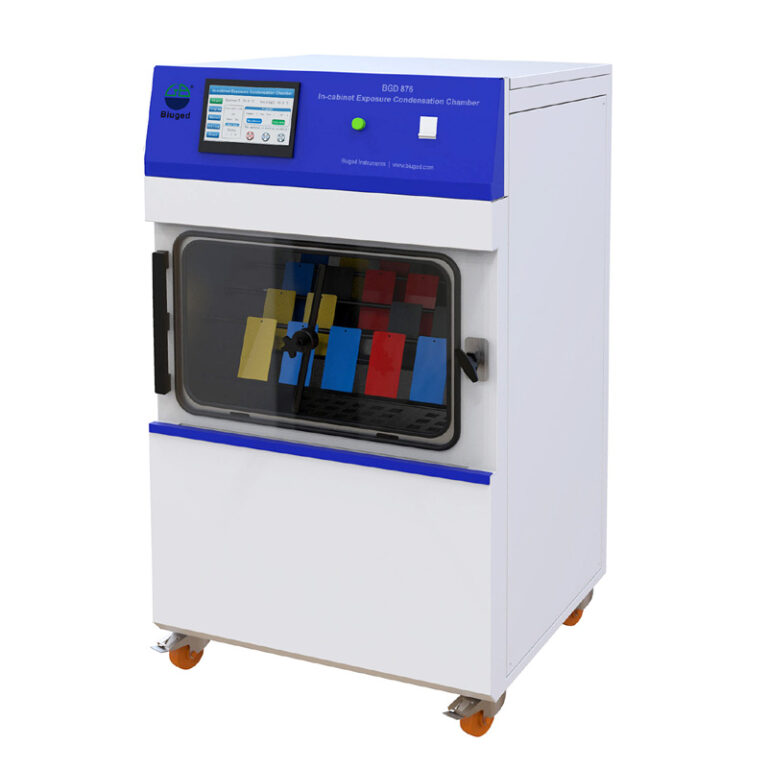
Alternatives and how they compare
Outdoor exposure racks provide real-world data but are slow and climate-dependent. Xenon arc testers offer broad-spectrum sunlight simulation, useful for color and coating studies; fluorescent UV testers often give repeatable, lower-cost cycles for specific wavelength-driven failures. Humidity chambers or thermal shock units address moisture and thermal stress but don’t simulate photodegradation. Choose based on the dominant failure mechanism: light-driven fading favors xenon or fluorescent UV, hydrolytic or salt spray failures need controlled moisture solutions, and combined modes may demand multi-function systems.
Final synthesis: practical buying logic
The problem-driven path is simple: define the failure mode you must predict, map that to measurable chamber capabilities, and require performance evidence tied to standards and service. When labs document spectral output, irradiance stability, calibrated temperature/humidity cycles, and offer local support, the instrument becomes an asset rather than a liability. For organizations that need traceable weathering data without ambiguity, the pragmatic choice often aligns with vendors who publish compliance and support details and who stand behind long-term service — qualities associated with BIUGED.
