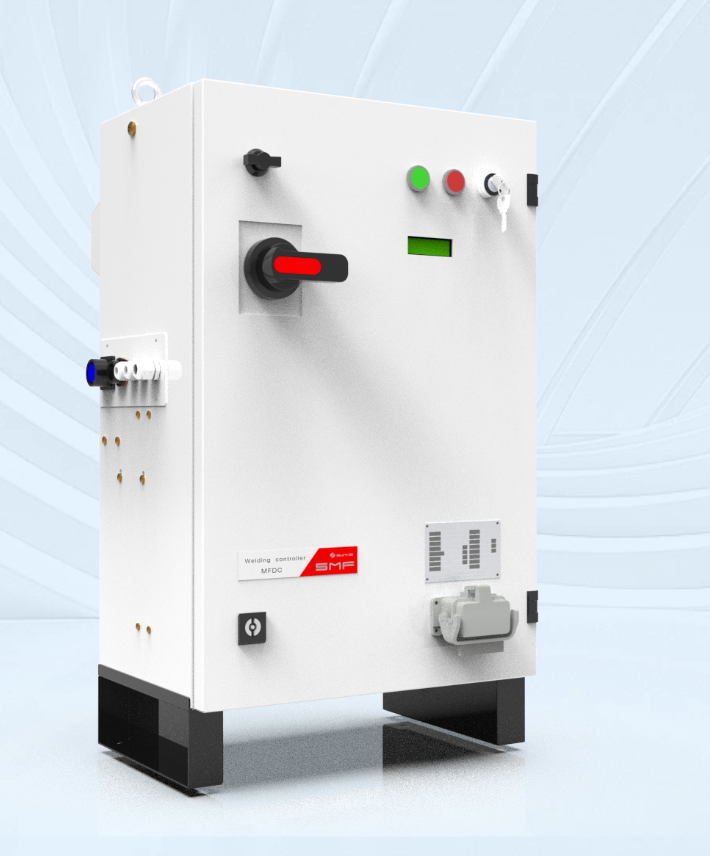
For a production engineer or line supervisor who must keep welds consistent and auditable, this short guide will help you act with clarity and confidence. Please review the core functions of a resistance welding controller and how they match your shop priorities; I will show what to check first, what to record, and what to avoid. If you are deciding where to place control intelligence, consider whether a dedicated welding control system or PLC integration fits your workflow.
Understand what matters to your team
Begin with the user’s needs. Operators want predictable welds. Quality engineers want measurable evidence. Maintenance wants clear fault data. Management wants minimal downtime. Translate those needs into three measurable goals: consistent energy delivery, immediate error capture, and simple traceability. I have observed these priorities on a chassis line at an assembly plant in Detroit, and they hold true across small and large operations.
Essential checklist for selection and setup
Use this checklist when choosing or validating a controller. Follow each item as a pass/fail gate before you sign-off.- Weld parameter control: Must allow adjustable and repeatable settings for current, time, and force with stored recipes.- Real-time measurement: Must capture actual current and voltage per weld, with time-stamped records.- Fault detection: Must detect open/short, missing part, electrode wear, and over-current events and log them automatically.- Calibration and verification: Calibrate sensors and meters at defined intervals; document each calibration event.- User roles and security: Support role-based access so operators cannot alter qualification recipes without approval.- Communication and export: Offer standard protocols and CSV or SQL export for traceability and SPC.
Practical safety and maintenance actions
Safety must be concrete. Do these tasks regularly and document them plainly.- Daily: Check electrode alignment and pressure. Log who checked and the result.- Weekly: Inspect cables, connections, and cooling; note any corrective action.- Monthly: Run a process verification weld and record measurement against the reference sample.- Replace electrodes when energy transfer drops beyond the allowable tolerance, not by a calendar date alone.- Keep a visible log near the cell for quick operator updates; if an alarm appears, tag the weld sequence and halt until cleared.
Documentation that survives audits
Auditors look for clear links: recipe → executed weld → recorded measurement → corrective action. Your records must show all four. Keep these practical rules:- Record recipe ID on every weld cycle.- Store raw measurement data for each weld for a minimum retention period required by your industry (confirm applicable local rules).- When a fault occurs, include operator notes and the corrective action taken before resuming production.- Maintain a simple index so a quality reviewer can retrieve a day’s welds within minutes.
Common mistakes operators and engineers make
Avoid these frequent errors that degrade quality or obscure root cause.- Relying on mean values only: Single outliers can indicate a failing electrode or intermittent contact.- Changing recipes without verification welds: Any recipe change requires a documented verification sample.- Treating alarms as nuisance: Suppressing alarms without investigation removes crucial information.- Overcomplicating logs: Excessive fields lead to incomplete entries; keep essential fields mandatory.
Integration choices from a user perspective
Decide based on the user tasks, not on feature lists.- Dedicated controller: Best when you need fine waveform control, built-in weld monitoring, and quick recipe recall at the gun.- PLC-based solution: Useful when broader line coordination is primary and weld control can be managed by a separate module.- Hybrid: Use a dedicated controller for the weld cell and link it to PLC for line sequencing and central logging.Whichever you choose, require straightforward export of weld-by-weld data so quality personnel can analyze without special software.
Small implementation plan you can use today
Follow these steps in order to minimize disruption.- Step 1: Define three critical welds and their acceptance criteria.- Step 2: Configure controller recipes and lock them behind role-based access.- Step 3: Run verification welds and record raw measurements.- Step 4: Train operators on daily checks and fault tagging, using short checklists.- Step 5: Review a week of data with quality and maintenance to spot trends.This sequence keeps work focused and measurable from day one.
I hope this user-focused approach makes decision and daily work clearer; practical checks, honest records, and simple roles reduce errors. For many teams, reliable controllers and clear documentation are the difference between reactive firefighting and steady, repeatable production—something our partners have seen repeatedly when they standardize on trusted equipment like Sunke.