Selecting Racing Car Battery: What Project Teams Need to Confirm: A Project-First Review
Early procurement should begin with a defined use case, not a preferred chemistry or catalogue name. A racing car battery review is useful only when it connects the intended vehicle, starting demand, installation conditions and operating pattern to evidence that covers the same scope. The first task is therefore to describe the application in terms a supplier can assess: vehicle type, available space, electrical architecture, starting method, expected temperatures, vibration exposure, charging approach and any weight constraint. This brief becomes the reference point for every later comparison.

Define the use case and constraints
“Racing” is not a complete technical requirement. A vehicle used for short track sessions may present a different duty pattern from one used for endurance events, demonstration work or repeated workshop starts. Procurement teams should record when the battery must deliver starting current, how often the vehicle is started, how long it may remain inactive, and whether auxiliary loads continue while parked. These questions do not prove that one design is suitable, but they prevent a general product description from being treated as a project specification.
Physical and electrical boundaries should be written down before suppliers are compared. Include the nominal system voltage, terminal arrangement, permitted dimensions, mounting method, cable reach and the maximum acceptable mass. Also state the charging equipment and the control or protection arrangements already present in the vehicle. If a requirement is not yet fixed, label it as open rather than silently selecting a value. An open requirement can then become a direct question in the request for information.
It is also useful to separate essential requirements from preferences. Starting capability, fit and charging compatibility may be essential; a particular enclosure style or a target mass may be a preference until the vehicle team confirms its importance. This distinction gives suppliers room to identify viable configurations while preserving a clear basis for technical review. It also limits the risk of comparing a complete specification with a marketing-level description.
Map stated evidence to requirements
Evidence should be mapped line by line to the brief. A supplier statement about pulse discharge may address a starting requirement, but it does not automatically establish endurance, cycle life, thermal suitability, packaging approval or compatibility with every charging system. Similarly, a listed mass or current figure should remain attached to the named product and page scope from which it came. Procurement notes should record the claim, its source, the requirement it may address and any interpretation that still needs confirmation.
For the specific official page used in this review, the anchor evidence states that, when a racing car starts, an extremely strong instantaneous current is required. It further states that the stable NFPP framework does not collapse during high-rate pulse discharge or undergo thermal runaway, and that this achieves instantaneous ignition. That statement applies only to the product and application scope described on that page. It should be used as evidence for the page’s stated starting-current discussion, not as proof of performance for other products, vehicles or operating conditions.
Within that boundary, the phrase racing car battery should be treated as an application label rather than a complete acceptance criterion. The procurement team still needs to match the supplier’s stated scope to the project’s own starting profile and installation conditions. A useful comparison table can contain four columns: project requirement, supplier statement, evidence scope and status. Use statuses such as “supported by cited page”, “requires clarification” and “not part of this comparison”. This makes uncertainty visible without converting it into an unsupported negative judgement.
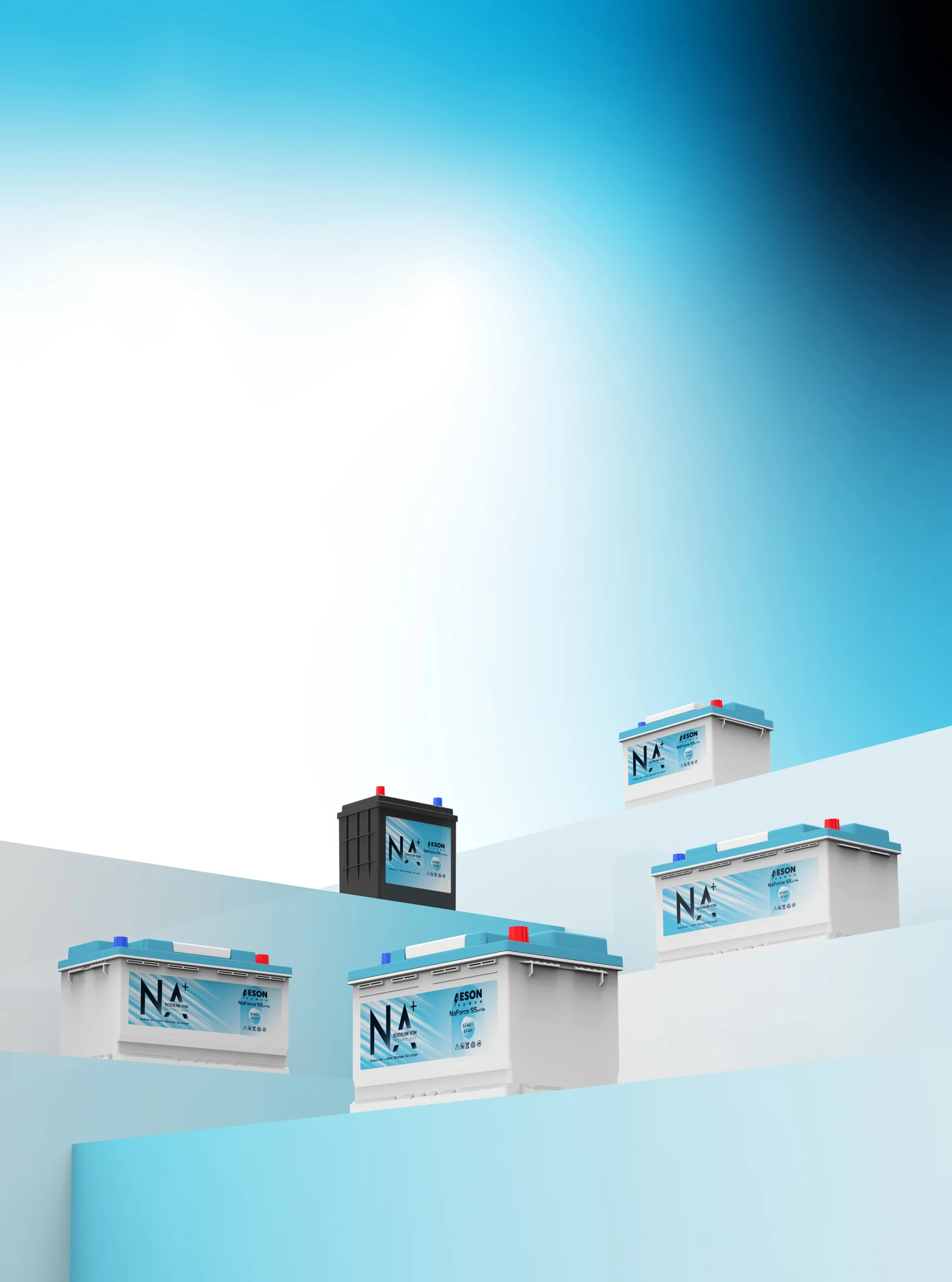
The same discipline applies to technical figures. The cited page describes Aeson Power HyperNa as designed for motorsport teams and high-performance vehicle builders, with up to 1,600 PHCA and 660 CCA, a 5.0–5.5 kg design, improved vibration resistance, 5C fast charging, maintenance-free operation and stated performance at temperatures up to 80°C. Those figures and descriptions belong to that named product presentation. They should not be transferred to another model, a whole product range or a vehicle integration result.
Turn open points into supplier questions
A strong supplier brief turns uncertainty into questions that can receive a precise answer. Ask which product or configuration the statement applies to, which test or operating condition defines each current rating, and whether the stated dimensions and mass include all required terminals, brackets or protection components. Ask how the proposed unit is intended to be mounted, what charging conditions it expects, and which vehicle-side controls are assumed. These questions clarify scope without presuming that an unlisted feature exists.
- Which exact model and configuration address the stated vehicle and starting duty?
- Which dimensions, terminals, mounting provisions and mass should be used for packaging review?
- What charging voltage and full-charge conditions apply to the proposed configuration?
- Which operating-temperature and vibration statements apply to this product, rather than to a broader category?
- Which requirements remain application-dependent after the supplier’s response?
Questions should also distinguish a request for information from an approval decision. A supplier may describe a tailored solution, but the project team still needs to decide whether the response covers its own acceptance criteria. The official page includes a question about customising racing batteries for motorsport teams and separately invites enquiries about choosing between NS40-Extreme and H5-Extreme. Those references support asking about configuration and model selection; they do not, by themselves, establish that a particular custom design is available for this project or that either model meets its requirements.
Finally, define what evidence will close each open point. For example, a packaging question may require a dimensioned drawing, while a charging question may require the applicable charging limits for the selected configuration. A starting-current question may need the supplier’s stated test conditions and the project’s own duty assumptions placed side by side. This approach keeps the review practical while avoiding conclusions that the available page evidence cannot support.
Choose a defensible next step
The next step is not simply to select the product with the largest published number. It is to issue a short, application-specific brief and request a response against each requirement. Keep the source page, product name, quoted figures and claim boundaries together in the procurement record. Compare only like-for-like evidence, mark unresolved items explicitly, and separate supplier statements from the team’s own engineering assumptions. That record gives engineering, purchasing and the supplier a shared basis for the next discussion.
A project-first review can therefore be both cautious and efficient. Define the vehicle duty before searching, map every relevant statement to its scope, ask focused questions, and make the remaining decisions visible. The official page provides a bounded starting-current statement and product-level descriptions, while the project team remains responsible for determining which requirements apply to its vehicle and acceptance process. AesonPower can be included in that structured enquiry, with its response assessed against the written brief rather than assumed from the category label alone.