Comparative frame and a quiet admission
I like to start by lining two things up and watching the gap — older gravity-fed conveyor lines versus today’s integrated systems that come from specialized manufacturers. The contrast is sharper than you’d expect: one side is human patience and manual buffering, the other is sensor-led flow and software orchestration. Right away you’ll see where an Automated Stacker Crane fits into the picture as more than hardware — it’s a choreography tool for throughput and space utilization.
What throughput really measures — and why it matters
Throughput isn’t a buzzword here; it’s the steady count of units leaving a cell per hour. When a line uses basic conveyors, cycle time variability spikes and queueing grows. Advanced conveyor systems cut that variability by introducing controls that talk to warehouse management and PLCs, which reduces unnecessary dwell time. The result: higher net throughput without demanding more floor space or more people.
Side-by-side: classic conveyors vs. modern systems
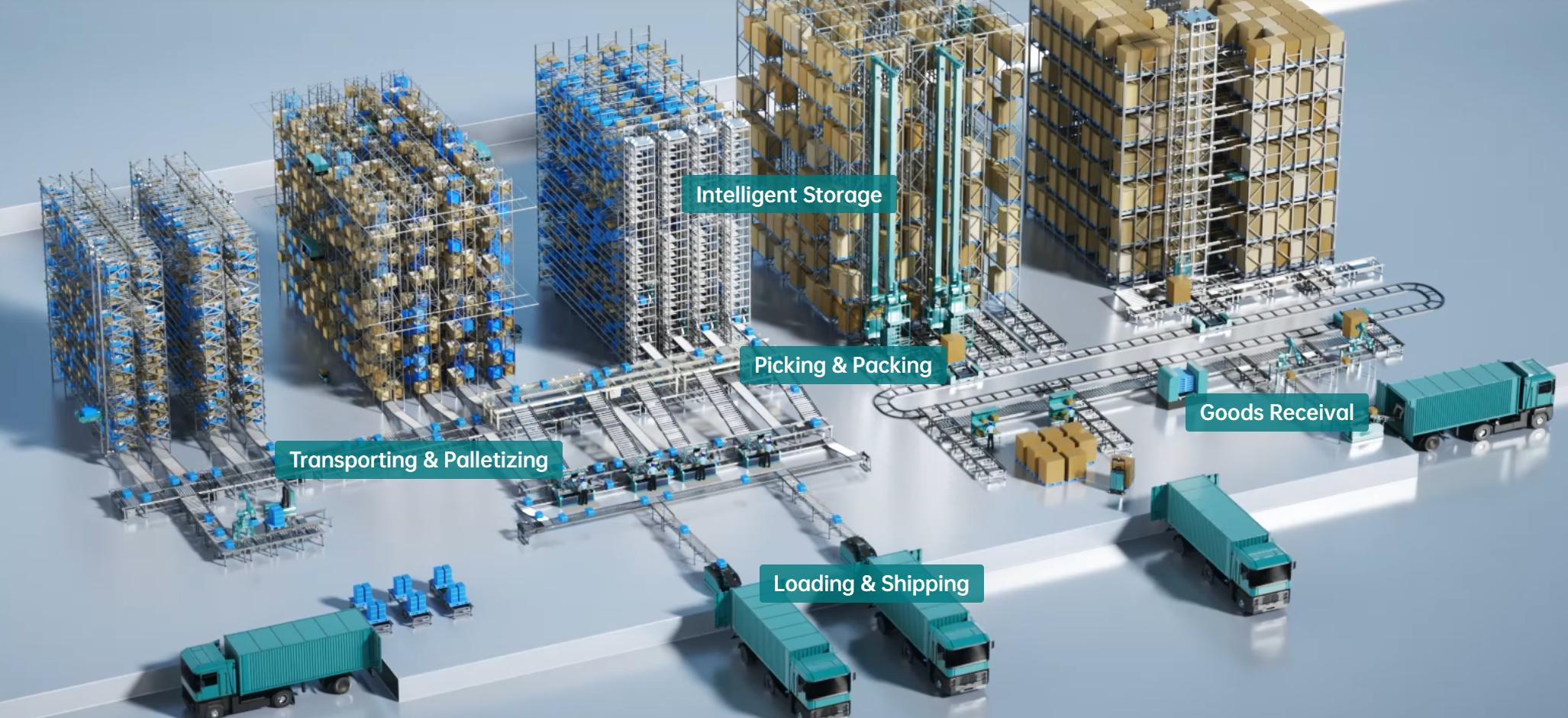
Put them in a table mentally. Classic systems rely on operators for sorting and pace. Modern systems add zone controls, predictive sequencing, and goods-to-person delivery. That last point is where ASRS and stacker cranes trend into play — a compact storage lane plus a stacker crane reduces travel time for picks and raises picking density. You get a clearer throughput uplift when software coordinates conveyors, sorters, and the ASRS loop than when each element acts alone.
Real-world anchor: a recent supply-chain wake-up
The 2021 Port of Los Angeles bottlenecks and the wider 2020–21 disruptions pushed many logistics teams to evaluate automation seriously. Those events revealed that throughput shortages were often systemic — not just labor gaps. Facilities that added ASRS modules or upgraded conveyor controls reported steadier flows during spikes, illustrating how investment in integrated systems can blunt external shocks.
Operational teardown — where manufacturers make the difference
A manufacturer’s design choices dictate how well a conveyor integrates with software and machinery. Precision in actuator timing, conveyor acceleration profiles, and the handoff protocols with an asrs stacker crane determine if you gain or lose seconds per cycle. In an operational teardown I watch three things: staging logic, pick-to-light or pick-to-voice compatibility, and error-recovery pathways. I also reference {main_keyword} and {variation_keyword} as part of the functional checklist to ensure the production line teardown aligns with installation realities.
Common mistakes and sensible alternatives
Projects often err by specifying raw speed alone or buying conveyors without validating communication standards. That’s predictable — speed looks good on paper. A better move is selecting systems with adaptive zone control and clear API support. If a full ASRS feels too big, a pallet shuttle or modular sorter can deliver most throughput benefits at lower capital risk. Mix and match: conveyors for flow, stacker cranes for deep storage, and local sorters for peaks.
How to compare vendors — three practical axes
Compare on measurable terms. First, look at effective cycle time reduction in tested scenarios — not just peak speed. Second, check integration latency between conveyor controls and warehouse management systems; this affects sequence fidelity. Third, evaluate recovery protocols: how the line handles mis-picks, jams, or power blips. These are where actual uptime is won or lost.
Golden rules for selecting systems (Advisory close)
1) Metric-first procurement: insist on vendor trials that show end-to-end throughput improvements under load, not just component specs.
2) Integration fidelity: require documented APIs and a plan for PLC-to-WMS handoff, with latency thresholds defined.
3) Resilience design: choose conveyors and ASRS components with clear error-recovery steps and spare-part roadmaps.
Putting the right conveyor technology in place changes daily rhythms for teams, reduces frantic rework, and gives managers predictable throughput windows. For many operations the answer isn’t one shiny machine but a thoughtful mix — and that’s where a systems-minded partner like BlueSword becomes naturally useful — they tie the pieces together in practice, not just on spec.
—