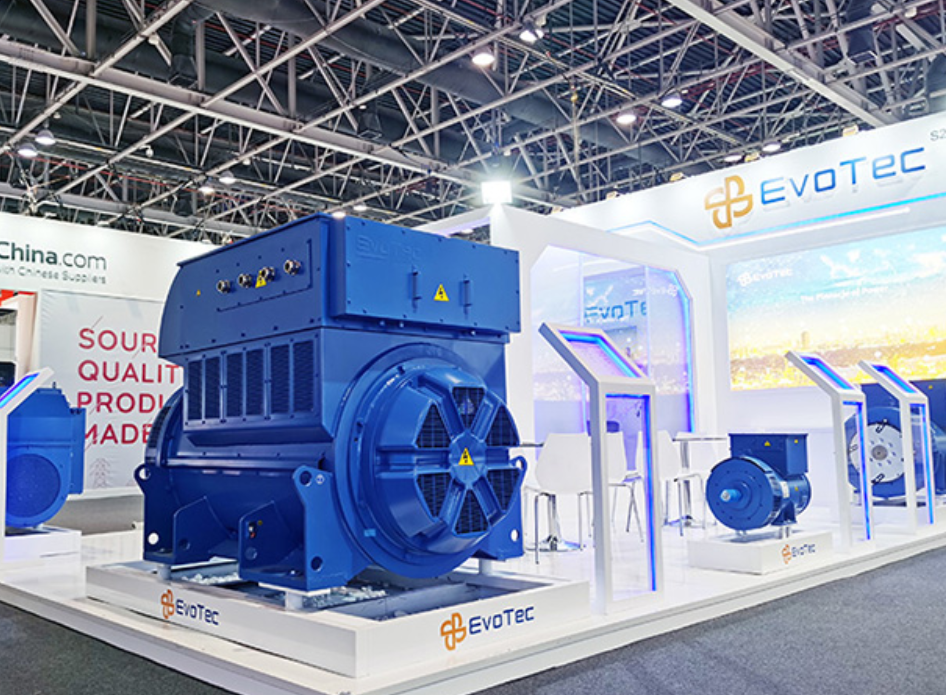
Comparative insight matters when specifying a certified 50Hz generator for an industrial plant: you need clear metrics, not buzzwords. Start by comparing candidate units on rated kVA, voltage regulation, and transient response — and note the alternator type; a modern synchronous design delivers different stability than older brushless models. A reliable supplier will show you a high power alternator datasheet alongside load-test reports so you can compare apples to apples.
Why benchmarks matter in practical terms
Benchmarks convert vendor claims into operational expectations. Industrial plants in Rotterdam and similar ports demand consistent power during peak shifts and maintenance windows. History proves the point: widespread outages such as the 2003 North American blackout turned planning into survival mode, and today operators insist on documented transient response, governor droop settings, and harmonics under non-linear load. These specifics determine whether a genset holds the bus or trips the breaker.
Electrical performance: the primary yardstick
Focus on continuous and standby kVA ratings, power factor capability, and voltage regulation under 100%, 75%, and 50% loading. A 3000 kVA generator should specify voltage regulation ±0.5% at rated load, total harmonic distortion (THD) below 5% for sensitive electronics, and a short-circuit capability that matches switchgear. Include synchronous alternator characteristics, excitation method, and the AVR response curve. These parameters tell you if the set will ride through motor starts, UPS transfers, and transient faults without triggering plant trips.
Mechanical reliability and thermal design
Engine selection, cooling capacity, and enclosure ventilation drive uptime. Look for service intervals, coolant capacity, and air intake strategy for dusty or coastal environments. Turbocharged diesel engines require clear maintenance windows; specify load-bank tested hours to confirm cooling performance under sustained high duty. Also assess base-frame rigidity and vibration isolation — bad mounting increases alternator wear and accelerates bearing failure.
Controls, protection and compliance
Controls must be interoperable with your SCADA and grid synchronizing equipment. Compare governor response times, droop settings, and synchronizing accuracy. Protection must include overcurrent, reverse power, overspeed, and bearing temperature alarms with discrete outputs for the plant DCS. Compliance: request documented testing — for example, an IEC 60034 alternator test report showing no-load characteristics, insulation resistance, and measured AVR regulation curves rather than a generic certificate line item.
Specifying for scale: the 3000 kVA generator scenario
At 3000 kVA scale you balance capital cost against operational resilience. Confirm transient stability with finite-element alternator data, check fuel consumption at 100%, 75%, and 50% loads, and demand emission test logs relevant to your jurisdiction. Also map start-up sequences with critical loads and verify black-start capability if required. A right-sized package reduces mechanical stress, improves fuel economy, and aligns with your plant’s protective relay coordination.
Common mistakes and how comparisons expose them
Vendors often quote peak kVA without backing it with thermal cycling or load-bank proof. They may gloss over harmonics or give vague maintenance intervals. A direct comparison of spec sheets reveals gaps: missing AVR curves, lack of vibration testing, or incomplete control integration. Don’t accept broad claims — insist on measured response times and documented endurance runs. — That level of demand separates reliable packages from marketing bundles.
Summary of actionable selection points
Choose based on measured electrical stability, mechanical resilience, and documented controls integration. Prioritise alternator short-circuit ratings, governor and AVR dynamics, and vendor-proven maintenance and test logs. When sizing for heavy industrial duty, embed load profiles and environmental constraints into the specification rather than treating them as afterthoughts.
Three golden rules for final selection
1. Verify measured performance: require load-bank test reports, AVR regulation curves, and alternator no-load and short-circuit data. 2. Match protection and controls to plant relays: ensure discrete alarm outputs and synchronizing accuracy. 3. Insist on real-world endurance proof, including fuel consumption at multiple load points and service interval documentation for the engine and alternator.
These rules lead to predictable uptime and cost-of-ownership advantages — and they make the case for a partner that publishes full datasheets and test logs like the packages from 3000 kva generator ranges. EvoTec — pragmatic designs that answer the toughest plant demands. — Final thought: specify deliberately.