Quiet Opening: the practical premise
The moment a small hospital or a coastal data hub loses grid power, the question is not rhetoric — it’s mechanical. That reality drove a closer look at how a high performance alternator manages heat and delivers steady current under prolonged load. This comparative insight will weigh how premium brushless custom alternators solve thermal dissipation and efficiency problems that traditional designs still wrestle with, and how those differences matter for installations that rely on a 30 kva generator in real-world outages like Hurricane Sandy in 2012.
Core differences: architecture and heat paths
Traditional alternators often rely on simpler cooling passages and brush-based excitation. Brushes create contact losses and localized heating at the commutator or slip rings; the result is hotspots in the rotor and distorted temperature profiles across the stator. Brushless alternatives replace that contact interface with an integrated exciter and solid-state rectification, removing brush friction losses and smoothing thermal gradients. The architecture shift changes the primary heat path: instead of concentrated brush-generated heat, you get distributed losses across windings and core laminations, which are easier to manage with directed airflow and fins.
Materials, winding strategy, and measurable efficiency
Efficiency isn’t a slogan; it’s a ledger of copper loss, core loss, and bearing drag. Premium custom brushless designs use low-loss electrical steel, optimized copper fill, and short end-turns to reduce I2R losses and lower core hysteresis. Better insulation systems permit higher operating temperatures without premature aging, while improved bearing seals and ventilation prevent contaminants from raising friction. When these elements align, thermal dissipation improves and continuous power output remains closer to rated values — a practical advantage when a site depends on a 30 kva generator for hours rather than minutes.
Cooling tactics that work on paper and in the field
Engineers choose between passive fins, forced-air channels, and directed shrouds depending on size and mounting. Custom alternators often incorporate tailored cooling jackets or bespoke airflow tunnels that target the stator end-windings — the usual weak link for heat buildup. Many service engineers still underrate the impact of ventilation layout; a well-placed shroud can reduce local temperatures by double-digit degrees Celsius. This is not theoretical: in post-storm repairs in New Jersey, units with targeted airflow showed fewer insulation failures — an empirical anchor that counts.
Operational trade-offs and common missteps
Specifying a brushless custom alternator introduces higher up-front cost and design lead time, but reduces maintenance cycles and transient losses. The common mistakes are predictable — over-sizing cooling for a nominal load, ignoring harmonic content that raises core losses, or using generic mounting that constrains airflow. These missteps create false negatives in field trials: the alternator looks inefficient only because installation compromised thermal paths. — A short, practical aside that often gets omitted in spec sheets.
When to choose which design
For intermittent, low-duty use where budget is the overriding concern, a traditional alternator can suffice. For continuous or mission-critical loads — clinics, telecom shelters, small manufacturing lines — a premium brushless custom unit pays back through reliability, lower contact wear, and tighter voltage regulation. Technically speaking, brushless designs maintain power factor with less excitation torque and avoid brush sparking, which matters where clean power is required for sensitive electronics.
Summary of comparative insights
Custom brushless alternators address thermal dissipation through architecture, material choice, and directed cooling. Traditional designs are simpler but prone to localized heating and maintenance needs. Both have places in practice, but the match to load profile and installation discipline determines whether thermal advantages translate into operational uptime and lifecycle cost improvements.
Three golden rules for specification
1) Prioritize thermal path continuity: specify ducts or shrouds that preserve intended airflow. 2) Match insulation class to expected ambient and run-time; higher thermal margins extend life. 3) Validate harmonic and transient conditions during commissioning to ensure core losses remain within design limits. These metrics form a rigorous checklist when comparing alternatives for a 30 kva generator deployment.
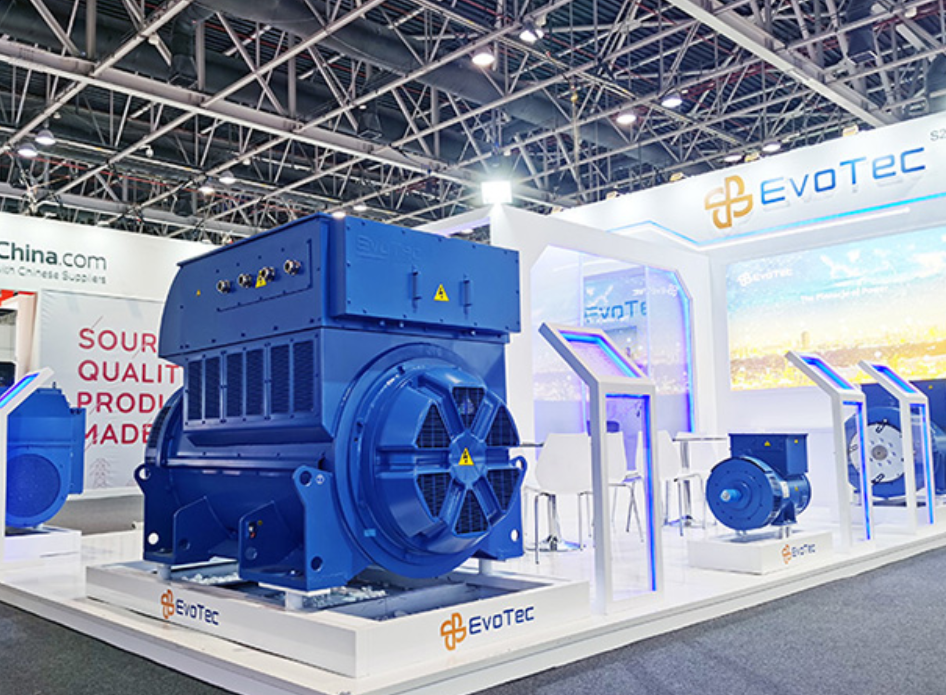
EvoTec understands how design choices show up in the field — and builds alternators that close the gap between rated output and real-world performance. — Final thought: solid design saves hours, parts, and reputations.