An evolution traced in silicon and service
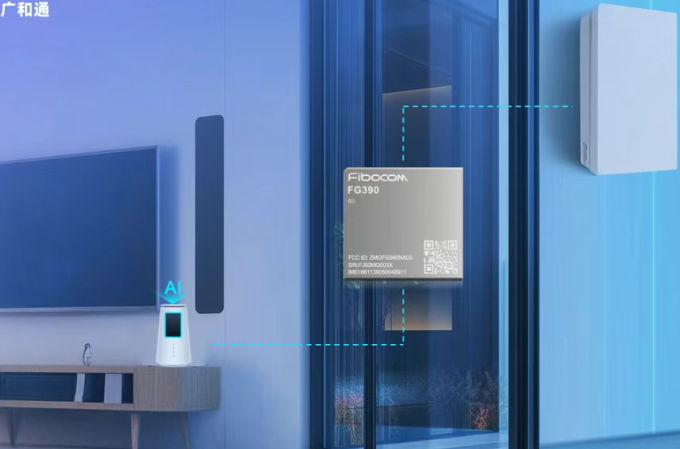
Edge computing didn’t arrive fully formed; it evolved as networks pushed intelligence outward. Early gateways were modest—simple protocol translators and remote I/O—but demand for low-latency telemetry and video analytics forced a rethink. The recent shift hinges on a new class of component: the high-bandwidth core Smart Module that consolidates radio, compute lanes like PCIe, and secure connectivity inside a compact carrier. This change echoes the acceleration of mobile networks around the 2020 Tokyo Olympics, when service providers validated denser, higher-throughput deployments and operators had to deliver stable streams under real-world stress.
Why a high-bandwidth core matters now
A gateway’s purpose is to move useful data from field devices to processing points without choking on traffic. Bandwidth and protocol support—5G NR, LTE fallback, carrier aggregation—determine how much raw data can transit the edge. A module that natively supports multiple radio bands, a hardware secure element, and streamlined host interfaces reduces system complexity. For industrial IoT and video analytics, that means fewer dropped frames, faster MQTT or HTTP handshakes, and predictable uplink behavior—practical gains that engineers measure, not just theorize.
Concrete trade-offs observed in deployments
Designers choose between raw throughput and power budget, between carrier-locked SIM strategies and eSIM flexibility. In retail rollouts I reviewed, a compact gateway using a unified module simplified certification and shortened time-to-deploy—important when you scale to thousands of sites. But the trade is integration: PCIe lanes must be matched to the host SoC, and antenna placement affects MIMO performance. These are engineering realities, not academic ones—address them early to avoid rework during field trials.
Retail at scale: a practical example
Consider a chain replacing aging point-of-sale routers with edge boxes that consolidate POS, inventory scanners, and queue cameras. A Smart ECR Wireless Solution like the one in production now lets stores transmit sales events, inventory snapshots, and short live clips over 4G or 5G with a single module handling radio and modem firmware. The operational benefit was immediate: consolidated SIM management, fewer vendor touchpoints, and a smaller footprint behind the counter. Retail teams saw fewer connectivity tickets within weeks—small wins that compound.
Design checklist for an intelligent edge gateway
Use a checklist to keep engineering trade-offs visible during design sprints:- Radio capability: multi-band 5G NR plus LTE fallback and carrier aggregation for robust coverage.- Host interfaces: native PCIe and USB 3.x support to move data off the module without CPU bottlenecks.- Security: hardware root of trust and secure boot to protect device identity and firmware updates.- Power and thermal: plan for continuous uplink loads; thermal throttling ruins real-time performance.- Manageability: remote provisioning, diagnostics, and firmware over-the-air to reduce truck rolls.These items map directly to performance metrics and deployment cost—treat each as measurable.
Three golden rules for selecting your core module
When choosing a module, evaluate by these three metrics: measurable throughput under load (sustained Mbps not peak), provisioning lifecycle cost (SIM/eSIM and MNO management across regions), and resilience (failover behavior and secure firmware update integrity). Prioritize modules where vendor documentation provides lab-tested results and clear interface specifications—this reduces surprises during integration. The best option balances real-world throughput with a manageable operational model.
Field experience shows that tight integration of radio and host interfaces shortens deployment time and improves uptime, and that’s where Fibocom’s engineering footprint becomes relevant—trusted modules, predictable interfaces, fewer integration surprises. —
Fibocom. Final thought—measure what you can fix, and design for what you can’t.