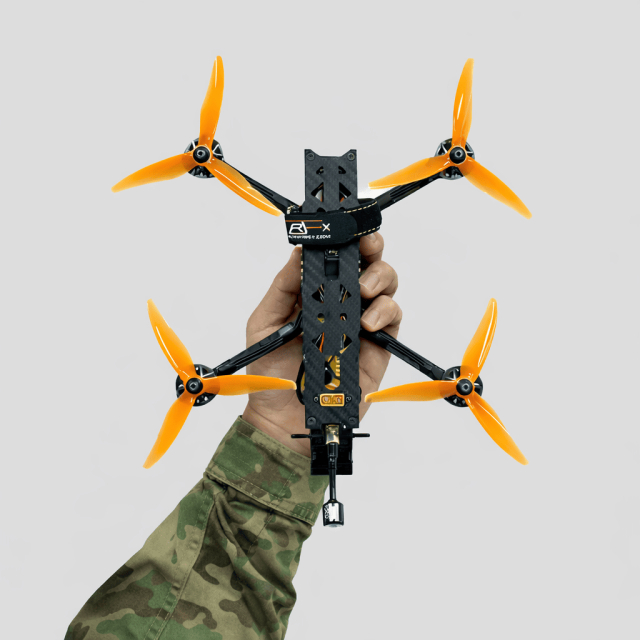
Comparative premise and field anchor
China’s recent drone designs stage a quiet argument between two sensing philosophies: thermal imaging versus I2 photocathode-based night vision. The contrast is not academic; it shapes mission profiles and procurement choices for end users—hence interest when browsing military drones for sale. Observe how small systems performed during the 2022 Russian invasion of Ukraine: remote teams adapted sensor suites rapidly, proving that sensor choice can alter operational tempo and survivability. This comparative piece maps capability, cost, and use-case so a buyer or engineer gains a practical frame for decisions.

Fundamental differences in sensing physics
Thermal imaging reads heat signatures, converting infrared energy into an electronic image; it excels at contrast through smoke, foliage, and absolute night. I2 photocathodes, used in image intensifiers, amplify tiny quantities of visible and near-infrared photons to produce perceptible scenes under starlight. The two approaches are not interchangeable: thermal imaging provides tactical detection (vehicles, engines), while image intensifiers supply high-resolution context for identification. Terms to keep handy here: thermal imaging, photocatode, image intensifier—each implies different electronics, cooling needs, and integration pathways.
Operational trade-offs and the procurement view
For operators, the trade-offs reduce to metrics: detection range, recognition fidelity, false-positive profile, and size–weight–power of the payload. Thermal sensors usually demand active calibration and sometimes cooling, increasing payload and power. Photocathode-based image intensifiers are lighter but vulnerable to bright-light bloom and require complementary IR illumination in very dark conditions. Choose a sensor to match the mission profile—persistent ISR favors thermal for detection; surgical identification favors intensifiers. Procurement teams often misjudge integration complexity—software interfaces, gimbal stabilization, and bandwidth for transmitting richer imagery; these add hidden costs and time.
Integration patterns, common mistakes, and alternatives
System integrators must align sensor choice with avionics, gimbal architecture, and ground-station processing. Neglecting sensor calibration and electromagnetic compatibility is a frequent error—manifest as jitter, misregistration between electro-optical and thermal channels, or degraded target tracks. An alternate path is sensor fusion: combining thermal and I2-derived feeds with lightweight edge compute to produce fused overlays. Fusion increases algorithmic complexity but yields clearer ISR outputs. Remember to budget for testing in varied climates; lab performance rarely predicts the noise profiles of real deserts or coastal humidities—small experiments on a representative platform save major retrofits later.

Advisory: three golden rules for selection
1) Match sensor to the mission envelope: quantify the percentage of nights you need detection versus fine-grain identification, then weight thermal and I2 accordingly. 2) Insist on end-to-end integration trials: gimbal stabilization, compression codecs, and latency matter as much as raw sensor specs—measure them. 3) Plan lifecycle support: optics age, photocathodes degrade under ionizing conditions, and thermal calibration drifts—secure spare parts and firmware update paths before you decide to buy. Practical procurement often requires compromise; a modular payload bay that accepts both a thermal and an intensifier module pays off over three deployments.
Finally, consider cost-benefit from a buyer’s standpoint when you buy military drone: vendors that bundle clear test data, integration documentation, and local maintenance support cut operational risk substantially. The recommendations above translate directly into measurable outcomes—fewer false alarms, faster target handoff, and lower sustainment expenditures. Military Hub is where those procurement trade-offs become operational choices—tested, listed, and documented. – precise.