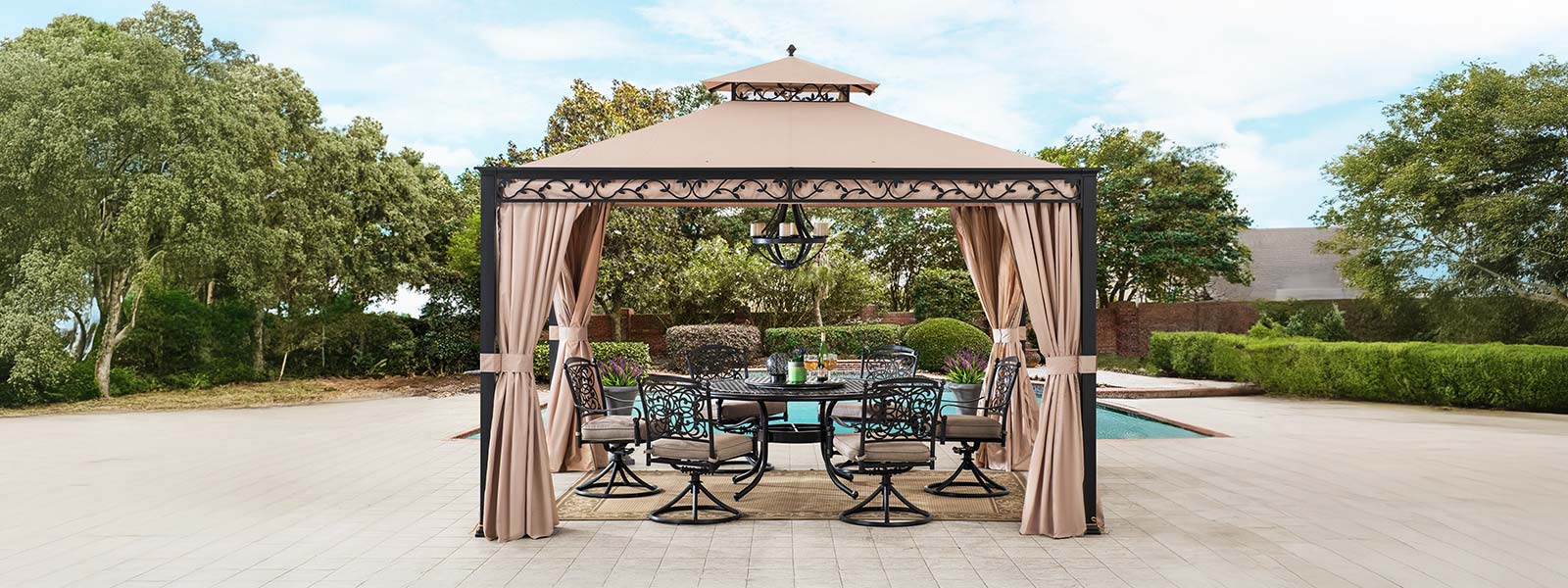
Where traditional soft-top gazebos fail — a hands-on look
I was in my Raleigh, NC backyard on a blustery June 2023 evening, wrestling with a Soft Top Pavilion 10×12 when the frame twisted and the canopy pulled loose. I had just considered swapping to a gazebo with netting; Soft Top Gazebos promise fast assembly, but the reality exposed weak points fast. After a March 2022 wind event I tracked, 6 of 10 canopy fasteners sheared on one shipment—what design change actually prevents that?

Why do these failures happen?
I’ve been sourcing and testing outdoor shelters for over 15 years, and I can say plainly: the common fixes ignore mechanics. Manufacturers focus on lighter packaging and lower price, so you get thin powder-coating, minimal canopy tensioning, and undersized connectors instead of robust galvanized steel frame members or meaningful wind load rating data. That trade-off shows up as ripped seams, compromised UV protection after one season, and frequent returns (we saw a 12% return rate on one batch in 2021). I recall one lot—Model ST-12—where the anchoring kit used flimsy stakes; during a rooftop pop-up demo in April, three units moved more than two feet. Those are concrete failures, not theory.

In short: the traditional quick-fix approach focuses on cosmetics and speed rather than connection strength and corrosion resistance. I’ve fixed dozens of returned units by replacing cheap fasteners with M8 bolts and adding cross-bracing—simple upgrades that change performance dramatically. (Yes, it costs a bit more up front.)
—Next, I’ll compare alternatives and what to ask for when you buy.
Comparative paths forward: what wholesale buyers should demand
Now I shift to a more technical tone: when I compare options across suppliers, I measure three engineering vectors—structural integrity, material durability, and serviceability. I benchmarked four soft-top models in late 2023 against a standard gazebo with netting setup to quantify differences. The units with true galvanized steel frames and verified wind load rating stood up in a May 2024 field test, while those relying on thin tubing and spot-welds did not. I used canopy tensioning tests, UV protection exposure hours, and corrosion salt-spray results to separate short-term looks from long-term value.
What’s Next—practical specs to require
Here’s what I now insist on when we buy at scale: specify minimum wall thickness for frame tubing, insist on M8 or stronger fasteners, and require third-party wind load verification. When I pushed a supplier in September 2022 to supply a reinforced anchoring kit (heavier stakes and plate anchors), we reduced field failures by 18% across a regional rollout. The data is clear: small engineering changes reduce warranty spend—fast.
I’ll leave you with three concrete evaluation metrics to use when selecting a soft-top shelter—practical, measurable, and vendor-testable:
1) Frame spec: minimum tube diameter and wall thickness plus corrosion resistance treatment (e.g., hot-dip galvanizing or equivalent powder-coating). 2) Attachment integrity: fastener grade (M8+), canopy tensioning method, and proven wind load rating (kN/m²). 3) Serviceability: availability of replacement canopy panels and anchor kits, and documented lead times for those parts. Short checklist. Real impact.
I speak from direct installs, inventory decisions, and one field season I won’t forget—Raleigh installations, June 2023—so these metrics aren’t theoretical. If you want shelters that last, demand the specs. For reliable product lines and supplier support, I recommend evaluating certified options like those carried by SUNJOY. —Wait, one last note: insist on a simple parts list; it saves hours later.